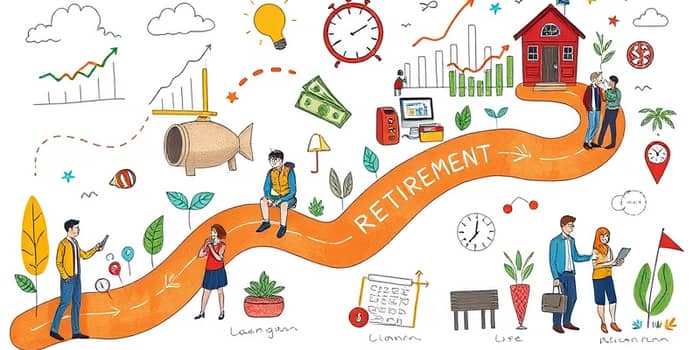
Drawing a clear pathway from your first paycheck to a fulfilling post-work life requires more than luck—it demands strategy, discipline, and foresight. This guide lays out each phase so you can retire with confidence.
Preparation and Saving
The cornerstone of any successful retirement is consistent saving via workplace plans. Whether it’s a 401(k), 403(b), or similar program, start early and contribute at least 15% of your gross pay each year. Employer matches are free money—aim to max out your contributions early to capture every dollar.
Complement tax-deferred accounts with a Roth IRA for tax-free withdrawals later. Over time, compounding interest becomes your greatest ally; break your long-term target into monthly or biweekly goals to keep momentum.
- Use high-growth assets (stocks) in early years.
- Shift towards bonds and cash as retirement nears.
- Diversify investments across multiple asset classes and rebalance annually.
Transition to Retirement
As you approach your target retirement age—often between 60 and 65—review your spending habits in depth. Track must-have expenses like housing, food, and healthcare separately from lifestyle choices such as travel and entertainment. This clarity lets you estimate a replacement income of 70–90% of pre-retirement earnings or roughly 25 times your annual expenses.
Pay off high-interest debts and maintain an emergency fund of six to twelve months’ expenses. A stress-free transition hinges on liquidity and flexibility.
Income Generation and Withdrawal Strategies
Once you retire, creating a sustainable income stream is vital. Social Security, pensions, IRAs, 401(k)s, brokerage accounts, Roth IRAs, annuities, and dividend-paying stocks form a mosaic of options. A common guideline is the 4% withdrawal rule, but adapt that to market conditions and personal needs.
- Follow a withdrawal sequence: taxable accounts first, then tax-deferred.
- Use tax diversification to reduce yearly liabilities.
- Execute charitable distributions for RMDs if aligned with your goals.
Risk Management
Guard against the sequence of returns risk by keeping one to two years of cash reserves. In down markets, reduce withdrawals or tap low-risk buckets to avoid selling assets at depressed prices.
Plan for inflation and longevity simultaneously. With retirees living decades longer, you must plan for decades-long retirement horizon. Regular rebalancing ensures your portfolio remains aligned with evolving needs and risk tolerance.
Healthcare, Medicare, and Social Security
Healthcare often becomes the fastest-growing expense in retirement. Enroll in Medicare Parts A through D at age 65, and consider Medigap or Medicare Advantage to cover gaps. Always budget for fast-growing healthcare costs including premiums, deductibles, and long-term care.
Optimize Social Security by selecting your claiming age carefully. Delaying benefits can increase your monthly payment, but weigh that against your health, life expectancy, and financial situation. Each year, review your benefit statements for adjustments tied to cost-of-living increases.
2026-Specific Updates and Action Items
The SECURE 2.0 Act introduces mandatory Roth catch-ups for high earners and shifts RMD ages. In 2026, RMDs begin at age 73 for those turning that age this year; by 2033, the age moves to 75. A new senior deduction adds $2,000 for singles and $3,200 for married filers over 65.
- Review your RMD requirements if you’ll be 73 in 2026.
- Max 2025 retirement plan contributions before year-end.
- Rebalance your portfolio and revisit tax strategies.
- Review your Social Security claiming strategy based on updated IRS tables.
- Ensure Medicare enrollment and coverage choices are complete.
Adopt annual self-assessment checklist steps to confirm that you remain on track: income targets hit, withdrawal order set, and contingency plans updated.
Lifestyle and Holistic Considerations
Retirement isn’t solely about finances. Cultivating purpose, community, and mental well-being plays a crucial role. Engage in hobbies, volunteer work, or part-time consulting to stay intellectually active and socially connected.
Maintain physical health through regular exercise and preventive screenings. Reducing stress and fostering relationships can lower healthcare costs and enhance overall satisfaction.
With this comprehensive roadmap—covering preparation and saving, transition guidance, withdrawal strategies, risk mitigation, healthcare planning, and 2026-specific updates—you have the tools to build a resilient and fulfilling retirement. Begin now, stay disciplined, and adjust as life unfolds.
References
- https://www.ameriprise.com/financial-goals-priorities/retirement/7-top-retirement-tips
- https://robertswealth.com/2026-retirement-income-planning-a-practical-guide-to-turning-savings-into-paychecks/
- https://www.anbbank.com/financial-literacy/financial-planning/basic-strategies-for-achieving-your-retirement-goals
- https://www.actsretirement.org/resources-advice/retiring-in-2026/
- https://www.fidelity.com/learning-center/personal-finance/retirement/retirement-income-strategies
- https://whzwealth.com/blog/2026-retirement-planning-checklist-8-things-to-do-before-spring
- https://investor.vanguard.com/investor-resources-education/retirement/planning
- https://www.fidelity.com/learning-center/personal-finance/retirement/2026-money-moves
- https://dfpi.ca.gov/news/insights/6-step-financial-plan-for-2026/
- https://www.usa.gov/retirement-planning-tools
- https://www.nerdwallet.com/retirement/learn/retirement-planning-an-introduction
- https://www.financialplanningassociation.org/article/journal/NOV14-comparison-retirement-strategies-and-financial-planner-value
- https://www.ithinkfi.org/blog/blog-detail/ithink-blog/2026/01/07/your-2026-financial-roadmap-ithink-financial