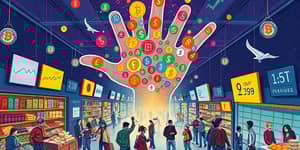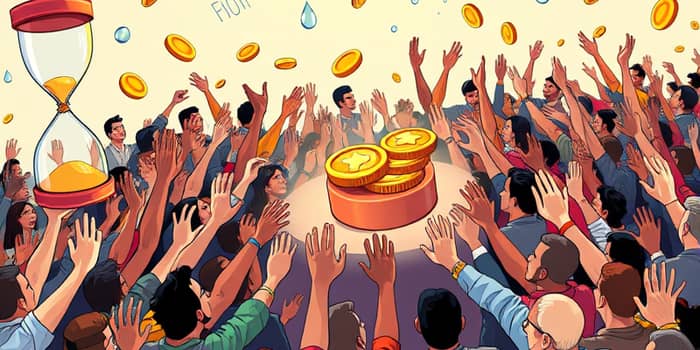
Scarcity is the driving force behind economic decision-making, shaping how societies allocate resources and individuals make choices. In a world of limited means and boundless desires, the balance between supply and demand dictates pricing, consumption, and innovation.
Through understanding the principles and psychological impacts of scarcity, we gain insight into market dynamics and personal behavior. This article delves into definitions, theories, real-world applications, and research findings, offering a comprehensive guide to the power of scarcity.
Definition and Core Concept of Scarcity
At its essence, limited resources vs unlimited human wants encapsulates the fundamental challenge of economics. Scarcity arises because we must choose how to use finite resources—be it time, money, or natural goods—while human desires multiply without bound.
Economists define scarcity as the condition where relative scarcity exists when needs exceed resources. This concept extends beyond physical products to include intangible assets like skills and opportunities. Without scarcity, there would be no need for trade, pricing, or allocation mechanisms.
The Scarcity Principle: Supply, Demand, and Pricing
The scarcity principle holds that when demand outpaces supply, prices rise to restore equilibrium. The Law of Supply and Demand illustrates this: suppliers offer more at higher prices, while consumers purchase less as prices climb.
When a product is in short supply but enjoys strong demand, higher prices serve two functions: they ration limited stock and signal producers to increase output or enter the market. Causes of scarcity range from natural limitations and production constraints to strategic withholding of inventory by businesses.
Psychological Effects of Scarcity
Scarcity doesn’t just affect prices; it wields a powerful influence on the human mind. By creating a sense of urgency, scarcity taps into the fear of missing out, driving consumers toward rapid, sometimes impulsive, decisions.
Researchers have identified several cognitive biases triggered by scarcity. These shortcuts shape perceived value and behavior:
- Loss aversion: Avoiding the regret of missing out on scarce items
- Anchoring: Fixating on scarcity claims as a reference point
- Scarcity heuristic: Equating rarity with superior quality
- Reduced price sensitivity: Overlooking cost in the face of limited availability
Collectively, these biases foster quicker purchases and can diminish careful evaluation of alternatives.
Scarcity in Consumer Behavior and Marketing
Businesses harness scarcity marketing to boost sales and engagement. Through tactics like countdown timers, stock counters, and limited editions, companies create higher perceived value and urgency around offerings.
Scarcity can also amplify social proof: when consumers see others clamoring for a scarce product, the bandwagon effect intensifies desire, leading to a self-reinforcing cycle of demand.
- Limited-time offers
- Flash sales and exclusive releases
- Scarce inventory alerts
Such strategies narrow a consumer’s focus to the scarce product, often sidelining price considerations and alternative options.
Economic Implications and Resource Allocation
Scarcity compels societies to answer three central questions: what to produce, how to produce, and for whom to produce. Addressing these demands requires efficient systems that maximize output while conserving resources.
Utilizing efficient use of limited resources is essential for achieving economic efficiency and fostering growth. When nations invest in expanding productive capacity—through technology, education, or infrastructure—they can alleviate scarcity and elevate living standards over time.
Types of Economic Systems and Scarcity
Different societies propose varied solutions to scarcity through their economic systems. Each system reflects a unique method of decision-making and resource allocation.
Each approach carries trade-offs between efficiency, equity, and freedom, highlighting the multifaceted nature of tackling scarcity.
Practical Examples and Applications
Scarcity manifests in everyday contexts, from consumer goods to public health emergencies. Below are common scenarios where scarcity drives outcomes:
- Limited edition products and collectible releases
- Medical equipment shortages during crises
- Labor markets facing skill deficits
- Scarcity of natural resources like oil and freshwater
In the healthcare sector, scarcity of essential supplies can trigger panic buying and price spikes. In labor markets, companies compete for scarce talent by offering higher wages and benefits. These outcomes underscore scarcity’s pervasive influence.
Research Findings and Empirical Evidence
Empirical studies confirm that scarcity elevates perceived value and prompts greater spending. Under conditions of limited availability, consumers exhibit reduced price sensitivity and increased impulse buying, often foregoing careful comparison.
Long-term scarcity, such as persistent income constraints, can shape behavior and self-perception, affecting everything from goal-setting to psychological well-being. These findings emphasize that scarcity’s reach extends beyond markets into individual lives.
Conclusion and Key Takeaways
Scarcity lies at the heart of economic analysis, dictating how resources are shared, priced, and consumed. By understanding the interplay of supply, demand, and psychology, we can make more informed decisions as producers, consumers, and policymakers.
Whether through strategic marketing, public policy, or personal budgeting, acknowledging scarcity’s power allows us to allocate resources with intention and foresight. Embrace these principles to navigate a world where every choice reflects trade-offs, and every resource counts.
References
- https://microventures.com/the-scarcity-principle
- https://www.frontiersin.org/journals/psychology/articles/10.3389/fpsyg.2022.792419/full
- https://www.indeed.com/career-advice/career-development/scarcity-principle
- https://www.pioneerpublisher.com/jwe/article/download/1095/996/1148
- https://www.ibeconomics.com/ib-economics-scarcity-and-choice.html
- https://www.journals.uchicago.edu/doi/full/10.1086/710531
- https://en.wikipedia.org/wiki/Scarcity
- https://news.iu.edu/live/news/26870-scarcity-reduces-consumers-concerns-about-prices
- https://thedecisionlab.com/reference-guide/anthropology/scarcity
- https://pmc.ncbi.nlm.nih.gov/articles/PMC9520963/
- https://fiveable.me/key-terms/principles-econ/scarcity
- https://www.newneuromarketing.com/mastering-scarcity-unveiling-the-psychology-and-impact-of-scarcity-marketing-cues-on-consumer-behavior
- https://www.econlib.org/library/Topics/College/scarcity.html
- https://maccelerator.la/en/blog/entrepreneurship/behavioral-psychology-behind-scarcity/
- https://www.netsuite.com/portal/resource/articles/business-strategy/scarcity.shtml