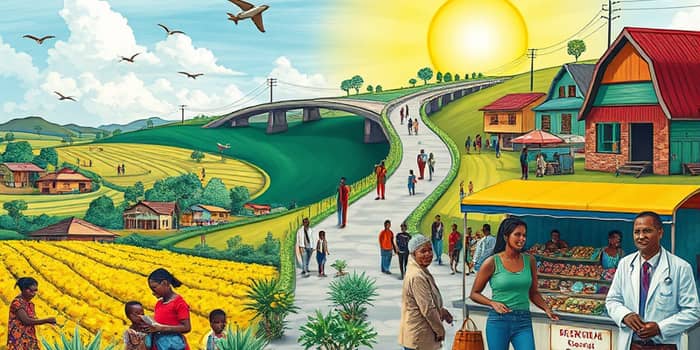
Poverty can feel like a weight that never lifts. Yet, through collective action, policy innovation, and individual resilience, we can dismantle the structures that hold people back. This article explores the nature of poverty traps and offers concrete strategies for lasting change.
By understanding the root causes and sharing inspiring examples, we aim to equip readers with both knowledge and hope. Together, we can forge pathways to economic freedom and social dignity.
Understanding the Poverty Trap
A self-reinforcing mechanism that causes poverty is often hidden within social and economic systems. Like quicksand, early disadvantages swell over time, pulling individuals and communities deeper into hardship.
Children forced into labor miss out on education; families pay high-interest loans instead of investing in health or small businesses. These interconnected factors form a spiral that can span generations, making escape seem impossible without targeted interventions.
Core Mechanisms and Their Impact
Poverty traps emerge from multiple, overlapping barriers. Identifying these forces is the first step toward breaking them.
- Reduced productivity and labor driven by disease outbreaks, which lower incomes and limit environmental care.
- Asset depletion when families sell land or incur high-interest debt after climate-driven crop failures.
- Intergenerational transmission of disadvantage as children forgo schooling to contribute to family income, perpetuating low skills and limited opportunities.
- Vulnerability to shocks—such as conflict, natural disasters, or ecosystem decline—that collapse fragile livelihoods without safety nets.
These dynamics reinforce one another. For example, poor health reduces work capacity, which lowers earnings and restricts access to clean water or nutrition, further compromising health in a downward spiral.
Real-World Stories and Lessons
Across the globe, similar patterns emerge in diverse settings. In rural Bihar, India, farmers borrow at extreme rates after crop failure, only to lose their land when drought strikes again. In Sudan, civil unrest disrupts food supplies, plunging entire communities into acute hunger and debt.
Yet glimmers of hope shine through. In Mumbai’s informal markets, vendors form cooperatives to pool resources, negotiate better credit terms, and invest in education for their children. These collective actions demonstrate that community solidarity can blunt the sharp edges of systemic inequality.
Strategies to Break Free
There is no single magic bullet. Instead, successful escapes from poverty traps combine targeted policy interventions and investments, community engagement, and sustainable practices. Below is a summary of high-impact initiatives from around the world:
These programs share common features: predictable funding, local participation, and emphasis on both immediate relief and long-term capacity building.
Building Resilience and Hope
Beyond material support, nurturing community-led development and empowerment fosters a sense of ownership and dignity. When locals design solutions—be it agroforestry to restore degraded land or peer-led savings clubs—the results often outlast external aid.
Psychological factors matter, too. Programs that bolster psychological resilience, grit, and self-esteem help individuals navigate setbacks without falling back into poverty. Simple interventions, like life-skills workshops or mentorship networks, can spark profound shifts in outlook and ambition.
Actions You Can Take Today
Everyone has a role in dismantling poverty traps. Here are practical steps you can pursue:
- Support organizations championing education and microfinance in under-resourced areas.
- Advocate for inclusive policies—such as living wages, universal basic services, and child benefits—through petitions and community meetings.
- Volunteer your skills in mentorship programs, financial literacy workshops, or local development projects.
- Invest sustainably in social enterprises that create jobs and build local infrastructure.
Small actions, when multiplied by thousands, can reshape entire economies and restore hope to those trapped by circumstance.
Conclusion
Poverty traps are formidable, but not insurmountable. By combining robust policies, community-driven initiatives, and individual acts of solidarity, we can break cycles of disadvantage. Let this article serve as both a call to action and a blueprint for change.
Together, we can transform systems of despair into engines of opportunity—and ensure that no one remains caught in the quicksand of poverty.
References
- https://pmc.ncbi.nlm.nih.gov/articles/PMC11804583/
- https://www.canada.ca/en/employment-social-development/programs/poverty-reduction/reports/strategy.html
- https://www.equiruswealth.com/glossary/poverty-trap
- https://www.hamiltonproject.org/publication/post/the-power-of-policy-to-reduce-poverty-lessons-from-the-pandemic/
- https://www.concern.org.uk/news/poverty-trap-why-people-stay-poor
- https://outreach-international.org/blog/poverty-reduction-strategies-in-developing-countries/
- https://study.com/academy/lesson/video/the-poverty-trap-definition-impact-solutions.html
- https://www.technoserve.org/blog/5-strategies-address-global-poverty/
- https://pubmed.ncbi.nlm.nih.gov/39870971/
- http://www.saga.cornell.edu/prop/povtrap.html
- https://www.worldbank.org/en/topic/infrastructure/publication/infrastructure-and-poverty-reduction-innovative-policies
- https://www.un.org/en/global-issues/ending-poverty
- http://www.ontario.ca/page/building-strong-foundation-success-reducing-poverty-ontario-2020-2025