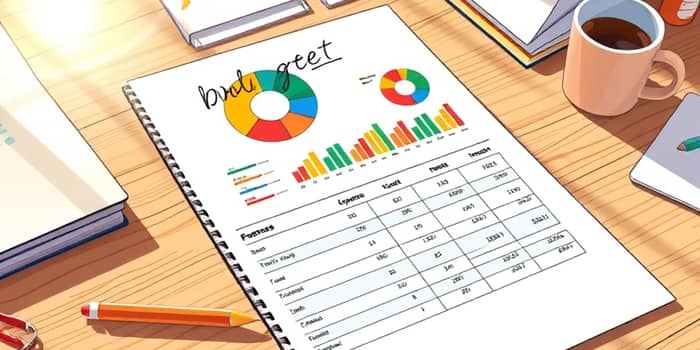
In a world where finances can quickly become overwhelming, the concept of a one-page budget stands as a beacon of clarity. By condensing your entire financial life onto a single sheet, you create a powerful tool for insight and control. Whether you’re a busy professional juggling multiple responsibilities, a student facing fluctuating income, or a household aiming for harmony, this approach offers a foundation for lasting change. This article will guide you through understanding, crafting, and maintaining a one-page budget that transforms complexity into simplicity and empowers you to reach your financial aspirations.
Understanding the One-Page Budget
A one-page budget is not just a shortened spreadsheet; it is a strategic framework that highlights key metrics at a glance. It typically features three core sections: income, categorized expenses, and a summary panel displaying totals, savings goals, and net balance. The magic lies in its design: a single-sheet financial tracker format that allows you to identify overspending, uncover savings opportunities, and compare projected versus actual amount in seconds.
By limiting your layout to one page, you eliminate the temptation to bury data in multiple tabs or endless rows. Instead, every dollar moves through a clear path, granting you the power to act swiftly and confidently when adjustments are necessary.
Benefits of a Streamlined Financial Snapshot
When you embrace a one-page budget, the advantages extend far beyond brevity. You gain:
- Immediate visibility into cash flow, preventing unwelcome surprises at month’s end.
- Enhanced accountability with clear variance columns showing under or overspending.
- The ability to set and track savings goals and debt payoff benchmarks side by side.
Moreover, simplicity breeds consistency. A compact budget sheet is less intimidating, encouraging regular reviews that foster healthy financial habits and long-term success.
Building Your One-Page Budget: Step-by-Step
Creating your own one-page budget is both straightforward and empowering. Follow these steps to bring your financial blueprint to life:
- List every income source, from salary and bonuses to interest and side gigs.
- Categorize expenses into fixed (rent, insurance) and variable (groceries, entertainment) buckets.
- Enter projected amounts for each line item based on historical data or realistic targets.
- At month’s close, fill in actual spending figures and calculate the variance.
- Review the summary panel to see your net balance and adjust next month’s projections.
As you refine your numbers, watching the variances become smaller over time will fuel your motivation and highlight where to focus improvement.
Customizing Visuals and Tracking Your Progress
Humans are visual creatures, and a well-designed budget sheet can feel like a personal dashboard. Incorporating motivational color-coding and charts transforms a static table into an engaging progress report. Use a traffic-light color scheme—green for under budget, yellow for slight overshoot, red for significant variance—to catch your eye quickly.
Add a small pie or donut chart to illustrate the simple category breakdown with color cues. Each slice represents a macro category—needs, wants, savings—and coloring them distinctly helps you spot imbalances at a glance. These visual aids serve as both a check and an inspiration, reminding you of the tangible impact of each financial choice.
Putting It All Together: Sample Layout
Below is a sample structure that balances detail with clarity. Customize it to fit your unique circumstances, whether you allocate by the 50/30/20 rule or follow a zero-based philosophy.
In this layout, the top summary displays total income, total expenses, and net balance. Columns for projected, actual, and difference sit side by side, enabling you to make swift reallocations and ensure that every dollar assigned purposefully aligns with your priorities.
Staying Motivated and Making Adjustments
Consistency is the engine that drives financial transformation. Schedule a weekly or biweekly review to revisit your numbers, celebrate progress, and address any red flags. Small rewards—like an affordable treat when you hit a savings milestone—can reinforce positive behavior and keep momentum strong.
- Use reminders or calendar alerts to maintain your review cadence.
- Set incremental targets—increase savings by 1–2% each quarter to foster growth.
- Revisit your budget structure when life changes—starting a family, changing jobs, or moving homes.
Whether you prefer the zero-sum budgeting method or the 50/30/20 split, the key is adaptability. As your goals evolve, your one-page budget remains a living document that guides you toward financial confidence.
Conclusion: Your Path to Financial Confidence
Embracing a one-page budget is a bold step toward mastering your finances. This minimalist yet comprehensive tool empowers you to see patterns, seize opportunities, and course-correct in real time. With a clear snapshot of your income and expenses, you build momentum, reduce stress, and move steadily toward your dreams—home ownership, debt freedom, or a robust savings cushion.
Remember, financial mastery is not a destination but a journey. Let your one-page budget serve as a compass, illuminating each decision and propelling you forward. Start today: draft your sheet, color-code your categories, and experience the satisfaction of clarity. Your future self will thank you for the discipline and insight you cultivate right now.
References
- https://www.smartsheet.com/top-excel-budget-templates
- https://www.canva.com/templates/s/budget/
- https://www.med.upenn.edu/orss/excel-templates.html
- https://docs.google.com/spreadsheets/d/1YlGTsomx1Y47jdc9HMdV4iVLP9vtZEcNJZQWHLTc1jk/edit
- https://excel.cloud.microsoft/create/en/budget-templates/
- https://www.stepchange.org/debt-info/how-to-make-a-budget.aspx
- https://www.nhnonprofits.org/resources/budget-template