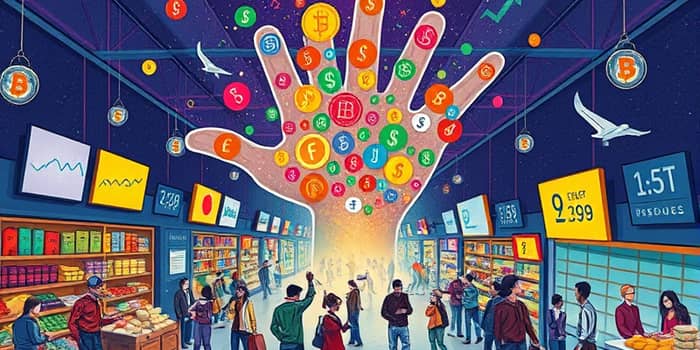
In every transaction we make, an unseen force guides the price we pay and the resources we consume. The concept of the “invisible hand” traces back to the work of Scottish philosopher Adam Smith in the eighteenth century. His metaphor illustrates how individual choices, guided solely by personal motivations, can lead to the accumulated self-interested actions of individuals producing collective benefits.
From the microeconomics of your neighborhood grocery to the macroeconomics of global trade, the invisible hand manifests in diverse arenas. In digital platforms, ride-sharing apps, and renewable energy markets, individual choices aggregate into trends that reshape industries. Embracing this lens transforms how you perceive everyday economic interactions.
Origins in Adam Smith’s Works
Adam Smith first introduced the phrase “an invisible hand” in his 1759 book The Theory of Moral Sentiments. In that context, he illustrated how wealthy individuals, while pursuing personal wealth, ended up allocating resources in ways that resembled a fair distribution of necessities. Smith reflected on how the actions of market participants could, without intention, mirror the results of equal division among all people.
Seventeen years later, in An Inquiry into the Nature and Causes of the Wealth of Nations (1776), Smith revisited this image to criticize import restrictions. He argued that when a merchant prefers domestic industry, he intends only personal security, but is unexpectedly guided by a self-regulating nature of a free market to benefit society. This nuanced origin highlights that Smith spoke of an invisible hand, not the invisible hand.
Although Smith wrote an invisible hand, later writers shifted to the invisible hand to suggest a universal force. This subtle shift altered interpretations, embedding the metaphor more deeply into economic thought. Recognizing this evolution reminds us to return to Smith’s original context, where specific actions, rather than an abstract principle, guided his reasoning.
Self-Interest and the Baker Example
Smith emphasized that market activity is not driven by noble altruism, but by personal motives. As he famously noted, it is from the butcher’s regard to self-love that we expect our dinner. This insight reveals how self-interest operating in particular circumstances fuels productive enterprise and innovation without centralized direction.
Consider the humble baker. They do not bake out of benevolence, but to earn a living. To secure customers, the baker must offer quality bread at reasonable prices. If they overcharge, buyers will go elsewhere. The baker’s pursuit of profit, therefore, produces affordable essentials for the community even though that outcome was never the baker’s intent.
- The baker bakes bread to earn income.
- Customers choose based on price and quality.
- Competition ensures prices remain fair.
- Collective benefits arise from private goals.
Further, the baker depends on millers, farmers, and distributors to supply flour. This web of specialization highlights how the self-interested actions of individuals interlock to produce simple goods. No single artisan could create a loaf alone; cooperation emerges organically from each party’s profit motive, seamlessly integrating talents across the supply chain.
Supply, Demand, and Price Signals
At the heart of market coordination lies the interplay between supply, demand, and price. Prices emerge from countless exchanges, acting as signals that convey information about scarcity, preference, and value. This complex feedback loop of market signals aligns production with consumption, guiding resources toward their most valued uses without centralized planning.
When demand for a product rises, prices climb. Higher prices encourage producers to increase output or enter the market, expanding supply. Conversely, if demand falls, prices drop and producers shift focus to more profitable goods. Through this dynamic process, the invisible hand orchestrates an ongoing adjustment that balances supply with demand.
Today’s digital marketplaces illustrate this principle at speed. Surge pricing in ride-hailing services or dynamic ticket pricing for events reflects real-time adjustments in supply and demand. Automated algorithms amplify the complex feedback loop of market signals, rapidly channeling resources to serve shifting needs and maximizing efficiency in fractions of a second.
Competition: The Market’s Regulator
While self-interest imbues the market with energy, competition tempers that drive by preventing any single actor from dominating. When multiple sellers vie for customers, each must innovate, maintain quality, and keep prices in check. This competitive pressure forms a natural barrier against monopolistic behavior and safeguards consumers’ interests.
Competition also fosters specialization and efficiency. Producers concentrate on tasks where they have unique skills or advantages, benefiting from economies of scale and tailored expertise. As a result, markets become more robust, diverse, and resilient.
Innovation flourishes under competitive pressure. Companies invest in research and development to differentiate their offerings, from eco-friendly packaging to AI-driven personalization. Consumers, in turn, benefit from diverse options and tailored experiences. Such dynamism underscores how competition, when paired with transparent information, upholds consumer sovereignty and drives continuous improvement.
Integrating Morality with the Market
Although often portrayed as an advocate of unfettered capitalism, Adam Smith was foremost a moral philosopher. He recognized that markets require ethical norms and justice to function well. Without trust, fair rules, and respect for property, the invisible hand cannot guide actions toward positive outcomes.
Smith argued that dispersed knowledge throughout an economy only yields good results when participants adhere to moral constraints. He cautioned that markets thrive under imperfect conditions, yet still deliver prosperity despite policy missteps and human folly, showing that fair play and market forces can coexist to elevate society.
In practice, governments and institutions set the stage for markets to function ethically. Antitrust laws, consumer protections, and environmental regulations embody society’s moral standards, curbing excesses and externalities. These safeguards ensure that dispersed insights translate into outcomes that respect human dignity, community welfare, and planetary health.
Modern Interpretations and Criticisms
Over time, economists like Paul Samuelson popularized the invisible hand, framing it as a nearly mystical principle of free-market harmony. While this broad interpretation emphasizes efficiency and optimal resource allocation, critics highlight its limitations. Some argue that market outcomes can be skewed by power imbalances, externalities, and information asymmetries.
Friedrich Hayek later celebrated the price mechanism as a discovery process, emphasizing that no central planner could match the information aggregated through countless market interactions. He called it a “marvel” often taken for granted. Yet even Hayek acknowledged circumstances where markets falter, highlighting the need for institutional frameworks to correct imbalances and protect vulnerable groups.
- Markets may concentrate wealth and power in few hands.
- Environmental costs are often overlooked in private profit calculations.
- Information gaps can lead to adverse selection and moral hazard.
- Public goods and social welfare may require collective action.
Applying the Invisible Hand in Daily Life
Understanding the invisible hand empowers active participation in economic life. Whether you are an entrepreneur, consumer, or policymaker, you can harness market dynamics to achieve better results. By recognizing price signals, seeking value, and encouraging healthy competition, you can shape outcomes that serve your interests and the community.
Adopting an invisible hand mindset means seeing opportunities where others see chaos. Entrepreneurs can identify gaps by studying unmet consumer demands, while policymakers can design incentives that harness private ambitions for public ends. By adopting a systems view, you can anticipate market shifts and contribute to solutions that balance self-interest with collective well-being.
- Observe price trends to anticipate shifts in supply and demand.
- Support businesses that balance profit with social responsibility.
- Foster innovation by investing time or capital in new ideas.
- Advocate for transparent regulations that protect fairness.
Conclusion: Embracing Balanced Markets
The invisible hand metaphor endures because it captures a profound truth: order can emerge from individual action without central direction. Yet this process is not infallible. To realize the promise of free markets, we must supplement competition with moral norms, policy safeguards, and collective awareness.
By acknowledging both the power and the boundaries of the invisible hand, we can cultivate an economic environment that fosters growth, innovation, and justice. As consumers, producers, and citizens, each of us plays a role in shaping the markets we inhabit. Together, we reveal the true hand that builds our shared prosperity.
References
- https://www.britannica.com/money/invisible-hand
- https://www.lgtwm-us.com/en/insights/lifestyle/adam-smiths-invisible-hand-307502
- https://fiveable.me/key-terms/ap-micro/invisible-hand
- https://www.adamsmithworks.org/documents/adam-smith-peter-foster-invisible-hand
- https://www.youtube.com/watch?v=53rKW8JRYhQ
- https://en.wikipedia.org/wiki/Invisible_hand