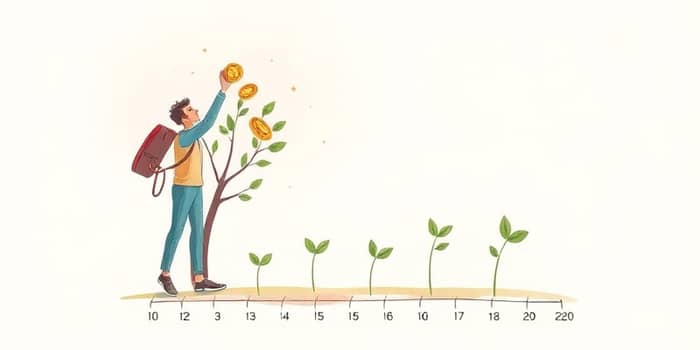
In the world of investing, the path to financial success is often paved with consistent, focused choices rather than sporadic gambles.
By embracing disciplined strategies, you can transform market volatility into a tool for wealth building.
At the heart of this approach lies dollar-cost averaging (DCA), a method that simplifies investing.
It involves investing a fixed dollar amount at regular intervals, regardless of market fluctuations.
This strategy helps average out purchase costs over time.
It buys more shares when prices are low and fewer when they are high.
Understanding Dollar-Cost Averaging
Dollar-cost averaging is designed to mitigate the impact of market volatility.
It removes the stress of timing the market perfectly.
This approach enforces financial discipline through automation.
- Invest a fixed amount, such as $1,000 monthly.
- Choose regular intervals like monthly or bi-weekly.
- Focus on assets like stocks, ETFs, or index funds.
- Automate contributions via brokerage platforms for consistency.
By doing so, it smooths out investment costs.
This makes it ideal for beginners or risk-averse individuals.
It encourages a long-term perspective.
Benefits of the Disciplined Dollar
The primary advantage is effective risk management.
DCA spreads exposure over time, reducing timing risks.
It helps avoid emotional decisions like panic selling.
During market dips, you automatically buy more shares.
This leads to a lower average cost per share.
- Reduces short-term market timing anxiety.
- Promotes behavioral control over greed and fear.
- Builds a consistent saving habit effortlessly.
- Enhances portfolio stability during volatility.
- Allows for opportunistic adjustments in declines.
For example, investors who held through the 2020 crash recovered quickly.
DCA ties directly to goal-setting, such as saving for a house.
It fosters a mindset of patience and persistence.
Drawbacks and Comparisons
However, DCA is not without its limitations.
One key drawback is the potential opportunity cost.
In steadily rising markets, lump-sum investing may yield higher returns.
DCA requires patience and a long investment horizon.
It is not foolproof against prolonged market declines.
- DCA performs best in volatile or declining markets.
- Lump-sum is superior in bull markets with steady gains.
- Assess personal risk tolerance before choosing.
Research shows lump-sum often outperforms, but DCA offers peace of mind.
This makes it a valuable tool for emotional control and discipline.
Practical Implementation Tips
To start with dollar-cost averaging, begin by setting clear goals.
Define your investment amount and frequency upfront.
Automate contributions to ensure consistency.
- Set up recurring transfers to your investment account.
- Choose diversified vehicles like ETFs or index funds.
- Review and adjust your plan regularly.
- Stay invested during market dips for long-term growth.
- Use money market funds for lump-sum parking if needed.
Automation removes the hassle of manual investing.
It helps maintain focus on your financial objectives.
Consulting a financial advisor can customize strategies.
- ETFs provide broad market exposure efficiently.
- Index funds offer low-cost diversification options.
- Stocks can be used for targeted growth strategies.
This approach builds a foundation for sustainable wealth accumulation.
Supporting Strategies for Focused Choices
Beyond DCA, portfolio diversification is crucial.
Spread investments across different asset classes.
This reduces overall volatility and risk.
- Include stocks, bonds, domestic, and international assets.
- Diversify across industries to minimize correlation.
- Rebalance periodically to maintain target allocations.
Systematic rebalancing removes emotional biases.
It ensures your portfolio aligns with your goals.
Set specific financial targets, like retirement savings.
Break them down into manageable monthly contributions.
- Define clear time horizons for each goal.
- Automate savings to build discipline over time.
- Focus on fundamentals rather than short-term noise.
This holistic approach enhances long-term investment success.
The Mindset of a Disciplined Investor
Cultivating the right mindset is essential for focused choices.
Embrace strategy-driven decisions over impulsive reactions.
Stay committed to your plan through market ups and downs.
- Avoid panic selling during downturns.
- Celebrate consistency rather than chasing quick gains.
- Use behavioral finance insights to overcome pitfalls.
- Focus on minimizing costs and maximizing efficiency.
True discipline is rare but achievable with practice.
It involves full investment and personalized allocation.
By prioritizing systematic and patient approaches, you can build lasting wealth.
Remember, the journey is as important as the destination.
Start small, stay consistent, and let compounding work its magic.
Your disciplined dollar will pave the way to financial freedom.
References
- https://grwealthplan.com/dollar-cost-averaging-a-disciplined-approach-to-investing/
- https://www.fidelity.com/learning-center/trading-investing/dollar-cost-averaging
- https://www.quanloop.com/en/insights/how-to-be-a-disciplined-investor/
- https://www.home.saxo/learn/guides/trading-strategies/how-dollar-cost-averaging-dca-can-help-during-market-volatility
- https://www.schwab.com/learn/story/what-is-dollar-cost-averaging
- https://www.investor.gov/introduction-investing/investing-basics/glossary/dollar-cost-averaging
- https://missionwealth.com/the-importance-of-investment-discipline/
- https://www.sunlifeglobalinvestments.com/en/insights/investor-education/saving-for-retirement/The-pros-and-cons-of-dollar-cost-averaging/
- https://www.fisherinvestments.com/en-gb/personal-wealth-management/how-we-are-different/disciplined-investment-strategy
- https://www.bankrate.com/investing/dollar-cost-averaging-what-it-is-avoids-timing-market/
- https://www.ml.com/articles/what-is-dollar-cost-averaging.html
- https://www.rocklandtrust.com/wealth-and-investments/investment-resources/the-pros-and-cons-of-dollar-cost-averaging
- https://nicolawealth.com/insights/2025-the-myth-of-the-disciplined-investor
- https://www.youtube.com/watch?v=DojGdOFPZyE