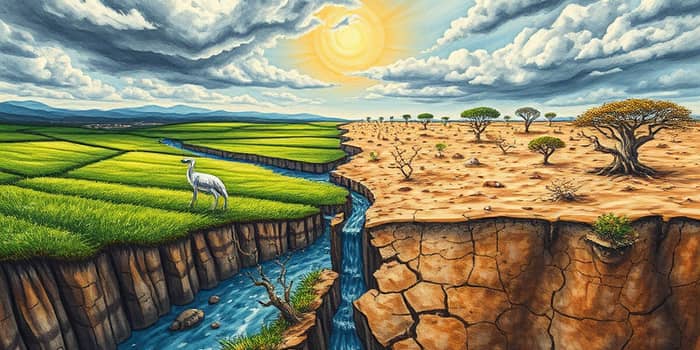
Every day, individuals, businesses and governments face choices limited by scarce resources. Yet the most dangerous decision can be to do nothing at all. In economics, inaction carries its own hidden ledger entry: the value of the forgone alternative. By recognizing this unseen cost, we unlock deeper insights into why choosing to wait or avoid a decision may be more expensive than taking bold steps forward.
Foundations of Opportunity Cost
Opportunity cost measures what you lose when you select one path over another. It captures both tangible, accounting-based costs recorded in financial statements and intangible, like time or strategic benefits that never appear on a balance sheet.
Economists define the concept simply: Opportunity cost equals the return on the option not chosen minus the return on the option chosen. This formula emphasizes that every decision carries dual outcomes: what you gain and what slips through your fingers.
The production possibilities curve (PPC) illustrates this trade-off graphically. Shifting resources from producing wheat to corn, for example, reduces the maximum output of one to increase the other. This curvature stands as a visual reminder that scarcity forces choices, and every unit redirected imposes a cost.
Micro-Level Decisions: Business and Personal Examples
On a smaller scale, opportunity cost shapes everyday business strategies and personal decisions. In many cases, the cost of doing nothing outweighs the apparent savings of waiting.
- An e-commerce firm delays outsourcing shipping and loses revenue due to late product launches.
- A warehouse lease saves $1,000 per month on rent but incurs extra commute time and wear, costing more overall.
- A $50,000 product launch has an opportunity cost of alternative investments in marketing or R&D.
- Holding a $500,000 surplus in factory machines yields 9%, versus 12% in stock portfolios.
- An employee pursuing a two-year master’s degree forfeits two years of salary but gains long-term career benefits.
- An investor holds $8,000 of shares waiting for a price rise, postponing liquidity and potential reinvestment.
- Computers priced at $339 instead of $299 impose a $40 opportunity cost for the same performance.
- A farmer planting wheat foregoes profits from planting corn on the same land.
These scenarios show that central to decision-making is not just what you spend, but what you fail to earn by standing still.
Macro-Scale Inaction: The Environmental Imperative
When nations delay climate action, the stakes rise into the trillions. A 2022 WWF report estimates business-as-usual nature loss will cost global GDP by 2050 nearly US$9.87 trillion, with the U.S. losing $83 billion per year and Japan $80 billion.
Climate inaction compounds through lost working hours, extreme weather damage, sea-level rise and stranded energy assets. The Network for Greening the Financial System (NGFS) warns that delaying the transition to net-zero could cost at least USD 1,266 trillion by the end of the century.
These numbers demonstrate that inaction is not neutral. It is a proactive investment in future losses, reinforcing that while action requires resources, so does standing still.
Evaluating Trade-Offs: Tools and Techniques
Decision-makers use structured methods to quantify and compare alternatives. A typical process includes:
- Listing potential options and defining clear goals.
- Estimating both explicit and implicit returns over relevant timelines.
- Applying scenario modeling to account for uncertainties in markets and environments.
- Calculating net advantage by subtracting returns on chosen options from those unchosen.
By embracing probabilistic thinking, organizations can identify when standing still hides latent costs and direct resources more wisely toward impactful strategies.
Policy Implications and the Call to Action
At the policy level, inaction can lock societies into suboptimal trajectories. Choices like delaying renewable energy investments or expanding conservation efforts carry massive hidden costs. Models contrasting “business-as-usual” versus “global conservation” pathways reveal that upfront spending on nature not only curbs GDP losses but also fosters equity for vulnerable nations.
Policymakers must internalize that preserving the status quo is not a zero-cost option. Every deferred regulation and postponed subsidy reallocates wealth, jobs and security from future generations to current inertia.
Conclusion: Embracing Informed Action
Opportunity cost teaches that every choice, including choosing to do nothing, reshapes our economic landscape. By illuminating the invisible toll of inaction, we empower individuals, businesses and governments to invest in the future rather than postpone it.
Reflect on your next big decision. Ask not just “What do I spend?” but also “What do I forfeit?” Recognize that the cost of doing nothing may be greater than the price of courage and change.
References
- https://www.netsuite.com/portal/resource/articles/accounting/opportunity-cost.shtml
- https://capitalscoalition.org/new-wwf-report-reveals-cost-of-inaction-on-loss-of-nature/
- https://www.indeed.com/career-advice/career-development/opportunity-cost-examples
- https://www.climatepolicyinitiative.org/the-cost-of-inaction/
- https://www.herc.research.va.gov/include/page.asp?id=opportunity-costs
- https://mn350.org/2020/01/what-is-the-cost-of-inaction/
- https://www.stlouisfed.org/open-vault/2020/january/real-life-examples-opportunity-cost
- https://nature4climate.org/about/nature-positive-recovery/the-costs-and-risks-of-inaction/
- https://www.econlib.org/library/Topics/College/opportunitycost.html
- https://www.americanprogress.org/article/high-price-inaction/
- https://www.youtube.com/watch?v=x-hYzRncxTc
- https://epic.uchicago.edu/insights/making-the-case-for-climate-action-the-growing-risks-and-costs-of-inaction/
- https://www.khanacademy.org/economics-finance-domain/ap-macroeconomics/basic-economics-concepts-macro/production-possibilities-curve-scarcity-choice-and-opportunity-cost-macro/a/lesson-summary-opportunity-cost-and-the-ppc
- https://www.climateworks.org/report/framework-costs-of-climate-action/