In an era of finite resources and escalating waste, the circular economy offers a beacon of hope. By shifting from a take-make-dispose mindset to one that embraces regeneration and renewal, societies can foster prosperity without depleting the planet.
This article explores how adopting a circular mindset can reshape industries, empower communities, and ensure a sustainable future. By redefining waste and embedding value at every stage, the circular economy promises systematic change.
Understanding the Circular Model
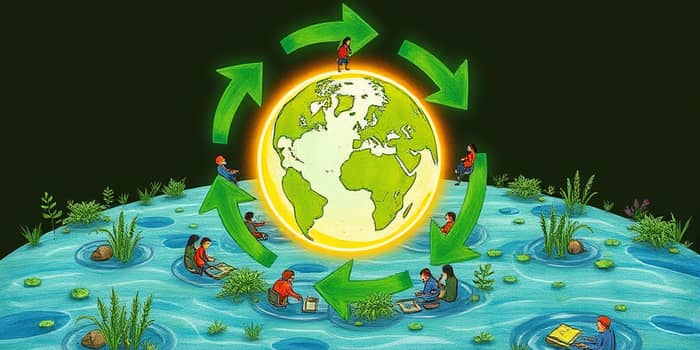
The traditional linear economy drives extraction, production, consumption, and disposal in a one-way flow. In contrast, the circular economy is built on three foundational principles that guide every stage of a product’s life.
- Eliminate waste and pollution through thoughtful design.
- Circulate products and materials at their highest value.
- Regenerate natural systems by returning resources to the earth.
By designing products to be disassembled, repaired, and reused, manufacturers embrace the idea that waste should not exist. This approach redefines value, placing emphasis on longevity and adaptability.
More than 80% of a product’s environmental impact is determined during its design. By prioritizing durability, modularity, and recyclability, manufacturers can embed circularity from inception.
Environmental Benefits and Impact
Implementing circular strategies can dramatically alter the environmental trajectory. A development path that embraces circularity has the potential to halve carbon dioxide emissions by 2030 compared to 2018 levels. This is significant given that nearly 45% of global emissions stem from material manufacturing.
Resource conservation also sees substantial gains. Circular practices could reduce virgin material demand by up to 32%, saving as much as 70% of materials compared to a linear approach.
Despite these opportunities, global waste reached 2.2 billion tonnes in 2020 and is projected to rise to 3.88 billion by 2050. Only 19% of municipal waste is recycled, underscoring the need for systemic change. By reimagining waste as a resource, we can foster healthier ecosystems and reduce pollution.
Regionally, Europe leads with a circularity rate of 11.8%, recycling almost half of its waste. However, high-income countries collect 96% of waste, while low-income nations manage only 39%, highlighting global inequities.
Economic Advantages and Business Resilience
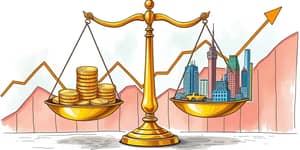
Beyond environmental gains, the circular economy presents compelling economic incentives. Companies integrating recycled inputs can save up to 25% on material costs. Moreover, global material and waste disposal savings could reach $640 billion by 2050.
Enhanced resource productivity also fuels growth. In Europe, every kilogram of material consumed generated €2.1 in economic output in 2022—more than twice the world average. Transitioning to circular models can boost GDP by an extra 0.5% annually.
- Reduced raw material dependency strengthens supply chains.
- Lower disposal costs free up capital for innovation.
- Resilience against price volatility and geopolitical shocks.
As resource scarcity and supply chain disruptions intensify, circular models provide a buffer against uncertainty, enabling companies to pivot toward secondary materials and local sourcing.
Social and Consumer Benefits
A transition to circularity can create millions of new jobs. Estimates suggest up to 45 million positions in waste management worldwide, with potential for 700,000 roles in the EU alone by 2030. Reuse creates over 200 times as many jobs as landfills and incinerators.
Consumers stand to gain through more durable and affordable products, repair services, and alternative ownership models such as leasing or sharing. These options not only save money but foster a sense of community and stewardship.
- Access to high-quality refurbished goods.
- Support networks for repair and maintenance.
- Opportunities to participate in sharing platforms.
Beyond job creation, circularity enhances quality of life. Communities benefit from cleaner environments, reduced landfill pressures, and engagement in cooperative repair and sharing networks, fostering social cohesion.
Sector-Specific Opportunities
Every industry can harness circular principles:
- In plastics, improved design and collection systems can curb 8 million tonnes of pollution entering oceans annually.
- Electronics hold embedded value; just 17.4% of e-waste is recycled, leaving billions of dollars in recoverable metals unused.
- The built environment benefits from remanufacturing materials, reducing embodied carbon and generating green jobs in construction.
Food systems also present opportunities: nearly half of all food produced in Canada is wasted. Circular strategies such as composting, redistribution, and valorization of by-products can transform agricultural waste into resources.
Challenges and the Path Forward
Despite progress, barriers remain. Recycling rates in OECD countries must grow tenfold to reach EU targets by 2030. Data gaps and inconsistent waste metrics hamper decision-making, while stagnation in material circularity highlights the need for policy innovation.
Innovative business models, such as product-as-a-service, can shift incentives from selling more products to delivering lasting value and performance. Embracing digital technologies for tracking material flows will be critical.
By embracing a circular economy, society can foster a regenerative system that values resource health, economic vitality, and social equity. The journey toward circularity is not only an environmental imperative but a transformative opportunity to redefine growth for future generations.
References
- https://youmatter.world/en/definition/definitions-circular-economy-meaning-definition-benefits-barriers/
- https://www.wri.org/insights/circular-economy-global-progress
- https://www.interlakemecalux.com/blog/circular-economy
- https://www.eea.europa.eu/en/analysis/publications/europes-circular-economy-in-facts
- https://www.okonrecycling.com/consumer-recycling-initiatives/learn-about-recycling/what-is-circular-economy/
- https://pmc.ncbi.nlm.nih.gov/articles/PMC10693739/
- https://www.europarl.europa.eu/topics/en/article/20151201STO05603/circular-economy-definition-importance-and-benefits
- https://circulareconomymonth.ca/themes/waste-reduction-week/
- https://greenly.earth/en-us/blog/company-guide/circular-economy-definition-and-principles
- https://worldgbc.org/article/waste-hierarchy-cbre/
- https://www.ellenmacarthurfoundation.org/topics/circular-economy-introduction/overview
- https://wcef2025.com/media/facts-about-the-circular-economy/
- https://www.milliken.com/en-us/blogs/circular-economy-sustainability
- https://www.oecd.org/en/publications/environment-at-a-glance-indicators_ac4b8b89-en/full-report/component-5.html
- https://www.ellenmacarthurfoundation.org/the-circular-economy-in-detail-deep-dive