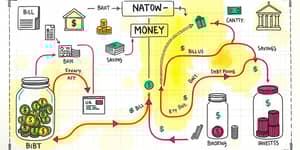
Achieving a state of allocating income to needs, wants, savings, and debt is like standing at the center of a well-tuned scale. With each financial decision, you tip the balance toward stability or strain. This guide will illuminate how to create, maintain, and refine a budget that brings lasting equilibrium to your financial life.
Understanding Financial Equilibrium
True financial equilibrium comes when income and outgo align with your values, aspirations, and daily realities. Imagine a professional adviser gently adjusting the weights on a scale—one side holds your basic necessities, the other your dreams and ambitions. This metaphor echoes the approach of Equilibrium Wealth Management, where personal goals and concrete strategies unite.
In practice, this means building a budget that offers structure without rigidity. You want to maintain flexibility for life changes, whether that involves a sudden expense, a bonus windfall, or shifting goals. By recognizing that budgets are living documents, you turn abstract numbers into a dynamic roadmap.
Popular Budgeting Methods Compared
Different methods suit different personalities and goals. Below is a table that outlines four proven approaches to budgeting, highlighting their mechanics, strengths, and ideal users.
Step-by-Step Budget Creation and Maintenance
Building a budget is not a one-time exercise but a disciplined process. Follow these steps to ensure alignment between your earnings and your ambitions:
- Gather Income and Expenses: Compile monthly after-tax income from pay stubs and list all fixed (rent, utilities) and variable (groceries, entertainment) costs.
- Categorize Wisely: Distinguish essentials (needs) from discretionary (wants) to see where adjustments are possible.
- Set Specific Goals: Define targets such as building a $6,000 emergency fund in one year or allocating 15% of income to retirement.
- Track Regularly: Conduct weekly 15-minute check-ins, then compare actual vs. planned spending each month and re-evaluate quarterly.
- Build a Buffer: Prioritize build a sustainable buffer against emergencies—aim for three to six months of expenses in savings.
- Adjust and Automate: Cut unused subscriptions, shift surplus from debt payments to savings when balances drop, and set up automatic transfers.
- Review and Refine: Revisit your budget after significant life events—raises, family changes, major purchases—and adjust allocations.
Integrating Budget into Holistic Financial Planning
A budget gains power when it sits at the core of your broader financial strategy. Think of budgeting as the foundation upon which other pillars—investment, insurance, tax planning, and estate considerations—stand.
Equilibrium Wealth Management’s four-step model provides a clear framework:
- Identify Goals, Values, and Risks: Understand what matters most—education for children, early retirement, philanthropy—and assess potential obstacles.
- Design Personalized Solutions: Work with advisors or trusted tools to translate aspirations into actionable plans, such as asset allocation and insurance coverage.
- Implement with Discipline: Automate contributions, schedule regular plan reviews, and consistently apply your budgeting framework.
- Sustain and Adapt: Embrace ongoing evaluation—daily tracking, weekly check-ins, and quarterly deep dives—to keep pace with life’s changes.
By choosing to link your budget to investment management, you ensure that each dollar saved feeds into a broader vision of security and prosperity.
Advanced Perspectives and Broader Impact
Beyond personal stability, budgeting plays a role in societal financial health. Studies show that increased financial literacy can shift portfolios toward higher-return assets, helping to reduce wealth inequality over time. Middle-wealth households often move capital into equities as they gain confidence, while top tiers diversify into bonds.
John Maynard Keynes famously warned, “Markets can remain irrational longer than you can remain solvent.” A disciplined budget guards you against overreliance on market timing, reinforcing the principle that security comes from planning, not speculation.
Furthermore, a well-maintained budget contributes to overall wellness. By identifying and controlling waste, you free resources for experiences, self-care, and investment in personal growth. This holistic approach ensures that financial equilibrium fosters emotional and psychological balance as well.
Practical Tips and Overcoming Challenges
Every budgeting journey faces hurdles, from impulse spending to life’s unpredictability. Here are key strategies for staying on course:
- Automate Savings Transfers: Treat contributions as non-negotiable bills.
- Use Cash for Discretionary Purchases: Physical money curbs overspending.
- Cancel Unused Subscriptions: Reclaim funds from services you no longer use.
- Set Realistic Monthly Targets: Avoid burnout by aligning goals with your lifestyle.
- Review Your Plan Quarterly: Ensure your budget evolves with your circumstances.
Common pitfalls include complacency after a windfall, deferred maintenance costs, and neglecting to adjust for inflation or income changes. By staying vigilant and employing these tactics, you fortify your financial resilience.
Conclusion
Budget balancing is more than a ledger exercise; it’s a pathway to empowerment, guiding you toward both immediate comfort and long-term fulfillment. By following structured methods, automating key actions, and embracing regular reviews, you transform budgeting from chore to catalyst.
Remember, every dollar purposeful and accounted for becomes a building block for dreams realized. With thoughtful planning, unwavering discipline, and an open mind, financial equilibrium is not just attainable—it becomes the cornerstone of a life lived with intention and peace of mind.
References
- https://www.ameripriseadvisors.com/priscilla.a.peoples/insights/strategic-expense-management/
- https://www.equilibriumwealthmanagement.com/Financial-Planning.1.htm
- https://www.finsyn.com/effective-budgeting-strategies-that-really-work-for-you/
- https://www.maufl.edu/en/news-and-events/macaws-blog/budgeting-and-personal-financial-planning-skills
- https://www.nerdwallet.com/finance/learn/how-to-save-money
- https://dfr.oregon.gov/financial/manage/pages/budget.aspx
- https://www.aol.com/3-numbers-every-american-check-141704074.html
- https://consumer.gov/your-money/making-budget
- https://www.fidelity.com/learning-center/personal-finance/spending-and-saving
- https://www.ifa.com/articles/power_prices_equilibrium
- https://www.northwestern.edu/financial-wellness/money-101/budgeting.html