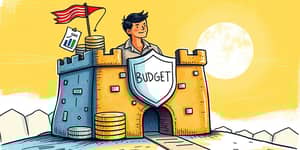
Imagine waking up to your golden years, free from the daily grind, ready to pursue passions and spend time with loved ones. Yet, without a solid budget, this dream can quickly turn into financial stress.
Budgeting is not just about numbers; it's about securing the freedom to enjoy retirement on your terms. In 2026, retirement planning is evolving with new trends and challenges that demand our attention.
Start by assessing where you stand today. Retirement readiness involves more than savings; it's about understanding income, expenses, and future needs to create a path to prosperity.
Assessing Your Retirement Readiness in 2026
The landscape of retirement is changing rapidly, with significant shifts affecting how we prepare for our later years. One major trend is the move away from traditional pensions.
Pensions now account for less than 10% of wealth for average earners, pushing more responsibility onto individuals through defined contribution plans. This shift requires proactive savings strategies.
To boost savings, many employers are adopting features like auto-enrollment and escalation. Technology is also playing a bigger role with AI personalization tools.
Consider these key trends for 2026 to stay ahead:
- Catch-up contributions are rising: $8,000 for ages 50-59 and 64+, and $10,000 for ages 60-63.
- Financial wellness programs are expanding to educate pre-retirees on crucial topics.
- The population aged 65+ is expected to reach 20% by 2074, highlighting the need for robust planning.
- AI tools are growing for income projections and withdrawal planning, making personalized advice accessible.
By understanding these trends, you can adapt your strategy to ensure you're on track for a secure retirement.
Estimating Your Future Income Needs
To budget effectively, you must first estimate how much income you'll need in retirement. A common rule is to aim for 70-80% of your pre-retirement income to maintain your lifestyle.
For example, if you earn $80,000 annually before retiring, you might need $56,000 to $64,000 per year. This accounts for reduced work-related expenses but maintains your standard of living.
Sources of retirement income are diverse and should be mapped out carefully. They include Social Security benefits, which are getting a boost in 2026.
Social Security COLA increases by 2.8% in 2026, raising the average retirement benefit to $2,071 per month. This can help cover essential costs like housing and healthcare.
Other income sources to consider are:
- Withdrawals from IRAs, 401(k)s, and Roth accounts for flexible spending.
- Investments such as dividends, interest, stocks, and bonds for growth potential.
- Part-time work or rental income to supplement your budget if needed.
- Pensions or annuities for guaranteed income streams.
Use guaranteed income, such as Social Security, to cover fixed costs, and variable income from withdrawals for discretionary expenses. This balance ensures stability and flexibility in your budget.
Categorizing Expenses: The Foundation of Your Budget
Breaking down expenses into categories helps clarify where your money will go in retirement. Start by tracking your current spending for accuracy, using credit card or checking statements.
Expenses can be divided into three main types to simplify planning. This approach allows you to prioritize needs over wants effectively.
- Fixed or mandatory expenses: These are essentials like housing, healthcare, utilities, and transportation. They are non-negotiable and must be prioritized in your budget.
- Flexible or discretionary expenses: This includes travel, dining, hobbies, and gifts. These can be adjusted based on your budget and lifestyle preferences.
- One-time expenses: Such as a new car or home repairs. Plan for these separately to avoid surprises and maintain financial stability.
By comparing these categories to your projected income, you can identify gaps and make adjustments. Aim to separate needs from wants to ensure essentials are always covered.
Adjust your expense estimates annually as your lifestyle changes. This proactive step helps you stay aligned with your retirement goals and avoid overspending.
Navigating Healthcare and Insurance Costs
Healthcare is one of the largest expenses in retirement, and planning for it is critical. Couples may spend over $300,000 on medical costs excluding long-term care, so early preparation is key.
In 2026, Medicare Part B premiums are rising to $202.90 per month, a 9.7% increase. However, Medicare Advantage plans are becoming more affordable, with average premiums dropping to $14 per month.
Strategies to manage healthcare costs include using Health Savings Accounts (HSAs) for tax-free growth and withdrawals. HSAs can be a powerful tool if utilized correctly.
Long-term care insurance is essential to protect assets from high care costs. Without it, you risk depleting your savings on unexpected medical needs.
Other strategies to consider are:
- Purchasing supplemental insurance to cover gaps in Medicare and reduce out-of-pocket expenses.
- Budgeting extra if retiring before age 65, when Medicare eligibility begins, to avoid coverage gaps.
- Conducting annual reviews of your insurance coverage to adapt to changing healthcare needs and costs.
- Exploring options like downsizing or diversifying income to offset potential healthcare expenses.
By incorporating these strategies, you can mitigate risks and ensure your budget remains resilient against healthcare shocks.
Beating Inflation and Planning Withdrawals
Inflation can erode your purchasing power over time, making it a crucial factor in retirement budgeting. Factor in 2-3% annual inflation when planning for a retirement that could last 20-30 years.
A popular withdrawal strategy is the 4% rule. This involves withdrawing 4% of your portfolio in the first year of retirement, then adjusting for inflation each subsequent year.
Recent research suggests a safe starting rate might be closer to 3.9%, but flexible strategies can allow for higher withdrawals. For instance, cutting spending during market downturns can preserve your nest egg.
Key points to remember include reviewing your budget annually to account for income changes and expense shifts. Use tools like AI simulations for better decision-making.
- Inflation adjustments are vital for long-term security; ignore them at your peril.
- Flexible withdrawal strategies, such as reducing spending in down markets, can enhance portfolio longevity.
- Diversify income sources to reduce risk from market volatility and ensure steady cash flow.
- Consider target-date funds with guaranteed income features for added stability in your investment approach.
By staying adaptable and informed, you can navigate inflation and withdrawal challenges with confidence.
Practical Steps and Tools for Your Budget
Creating a retirement budget doesn't have to be overwhelming. Follow these steps to build a realistic plan that adapts to your needs and goals.
- Map all your income sources, including Social Security, pensions, and investments, to get a clear picture of your financial resources.
- Classify your expenses into fixed and flexible categories based on current spending, adjusting for retirement changes.
- Plan for healthcare costs, incorporating insurance premiums and potential out-of-pocket expenses into your budget.
- Include inflation adjustments and decide on a withdrawal strategy, like the 4% rule, to maintain purchasing power.
- Track your actual spending versus your budget to stay on course and make timely adjustments as needed.
- Review and adjust your budget annually, considering retirement timing if income doesn't meet expenses to avoid shortfalls.
- Explore options like downsizing or diversifying income to close any gaps and enhance your financial security.
Leverage modern tools to simplify the process. Worksheets can help list expenses, while AI-powered apps offer simulations for better decision-making.
AI tools for simulations and tax-aware planning are becoming increasingly accessible, helping you optimize your budget for efficiency. Use these resources to stay proactive and informed.
Here’s a quick-reference table with key statistics for 2026 to guide your planning:
As you embark on this journey, remember that budgeting for retirement is an ongoing process. Life changes, markets fluctuate, and new opportunities arise.
Stay proactive by consulting financial professionals for advice on taxes and required minimum distributions. Their expertise can help you navigate complex decisions with ease.
Your golden years should be a time of joy and fulfillment. By taking these steps today, you can build a budget that supports your dreams and ensures financial security.
Start now, adjust as needed, and look forward to a retirement filled with possibilities. Embrace the reality of budgeting as a tool for freedom, not constraint.
References
- https://www.adp.com/spark/articles/2026/01/a-fresh-take-on-retirement-plans-8-trends-in-2026.aspx
- https://www.missionfed.com/learn/retirement-budget/
- https://www.athene.com/2026-retirement-outlook
- https://www.schwab.com/learn/story/retirement-budget-planning-9-steps-to-consider
- https://www.aarp.org/money/retirement/biggest-changes-2026/
- https://www.blackrock.com/us/individual/education/retirement/building-a-retirement-budget
- https://www.merceradvisors.com/insights/retirement/how-much-will-you-spend-in-retirement-a-guide-to-costs/
- https://www.morningstar.com/retirement/heres-what-your-retirement-spending-rate-should-be-2026
- https://www.dol.gov/agencies/ebsa/about-ebsa/our-activities/resource-center/publications/taking-the-mystery-out-of-retirement-planning
- https://worldatwork.org/publications/workspan-daily/5-trends-will-shake-up-the-retirement-industry-in-2026
- https://www.kiplinger.com/retirement/retirement-planning/retirement-planning-trends-2025
- https://www.eaton.bank/Resources/Meet-Eaton/News/7-budgeting-strategies-for-a-happier-retirement
- https://lebelharriman.com/2026-financial-planning-numbers-tax-retirement-limits/