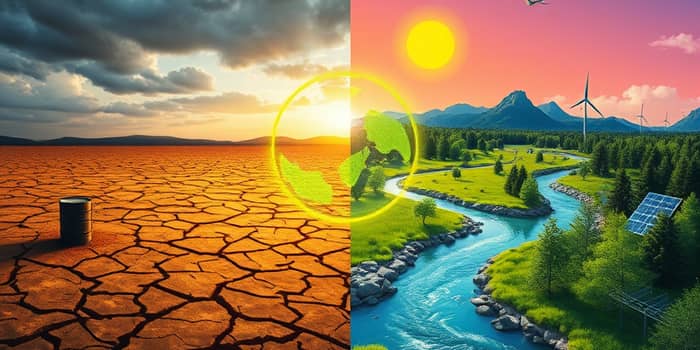
Global society stands at a crossroads, facing the paradox of abundant oil supplies while grappling with severe shortages of vital resources like food, water, and rare minerals. This tension stems from finite planetary limits and uneven distribution, pushing communities to operate beyond ecological thresholds. Amidst surging oil outputs, critical deficits in other areas fuel instability, hunger, and geopolitical friction.
Our goal is to illuminate the contrasting narratives of abundance and scarcity, quantify the ecological and human impacts, and inspire actionable steps that individuals, communities, and policymakers can implement to foster a more sustainable future.
From Peak Fears to a Super Glut
Once dominated by peak oil concerns, the hydrocarbon landscape has shifted dramatically. According to the IEA’s January 2026 report, global crude production will reach a record 108.7 million barrels per day by 2026, led by the United States, Canada, Brazil, Guyana, and Argentina. This “Americas Quintet” has neutralized OPEC+ cuts, creating excess supply faster than demand.
While discounted oil trades bolster economic growth in some regions, they mask an underlying fragility. Storage constraints, particularly in China, are pushing stockpiles onto tankers, while refineries designed for light sweet shale confront logistical bottlenecks. These developments underscore that abundance in one sector can obscure deeper vulnerabilities across interconnected systems.
The Weight of Biocapacity Deficits
Ecological capacity is the foundation upon which societies build prosperity. Unfortunately, many nations exhaust their annual biocapacity early, relying on imports or depleting local ecosystems. This pattern, known as ecological overshoot, reflects annual ecological overshoot of resources, highlighting the limits of regeneration and the consequences of overconsumption.
Countries like Singapore and Israel signal alarm, entering deficit days in early January. By contrast, nations rich in forests and cropland such as Brazil and Gabon maintain substantial reserves. The following table illustrates this divide:
This disparity reveals that resource management and environmental stewardship determine a country’s ability to thrive without external dependencies.
Human Costs of Scarcity
Scarcity is not a distant theoretical risk; it translates into real suffering. Over 318 million people now face crisis-level hunger, more than twice the figure from 2019, with confirmed famines in Gaza and Sudan marking the first dual events of our century. These tragedies are part of compounding crises in food and water that threaten the health and dignity of millions.
Shortages of minerals and rare earths jeopardize the clean energy transition, disrupting solar panel production, electric vehicle batteries, and nuclear technologies. Decades of extraction without circular practices risk locking nations into cycles of dependency and economic stagnation, a phenomenon known as the resource curse.
Turning the Tide: Circular Economy and Sustainable Innovation
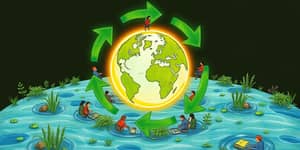
Confronting resource challenges demands a shift away from linear consumption models toward circular economic principles for regeneration. By designing products that can be repaired, recycled, or repurposed, we can dramatically reduce extraction pressure and environmental impact.
- Implement closed-loop manufacturing to recover materials and minimize waste.
- Invest in renewable energy sources to displace fossil fuels and reduce pollution.
- Promote agricultural practices that restore soil health and improve water retention.
- Encourage urban planning that prioritizes green spaces and sustainable transportation.
These strategies offer a blueprint for policymakers and businesses to align growth with planetary health, ensuring that future generations inherit a resilient and vibrant world.
Practical Steps for Individuals and Communities
Local solutions prove that small community actions spark change that scales globally. Every individual and community can contribute to resource stewardship through mindful choices and collective action.
- Reduce personal consumption by choosing local, seasonal produce and minimizing food waste.
- Conserve water through rainwater harvesting, efficient fixtures, and drought-resistant landscaping.
- Support circular products by prioritizing repair services and purchasing durable goods.
- Engage in community initiatives such as tool-sharing libraries and collaborative gardens.
- Advocate for policies that promote renewable energy, biodiversity protection, and equitable resource distribution.
Conclusion: Acting Today for a Balanced Tomorrow
The dichotomy of resource abundance and scarcity underscores a fundamental truth: our planet’s limits are non-negotiable. Yet within this reality lies an opportunity to reimagine how we live, produce, and consume. Through bold innovation, disciplined stewardship, and inclusive policies, we can chart a course that respects ecological boundaries and secures human wellbeing.
Each step—whether reducing water use at home, advocating for circular design, or investing in renewable infrastructure—brings us closer to a world where resources sustain rather than deplete our shared future. Together, we hold the power to transform scarcity into a driver of resilience, equity, and hope.
References
- https://fortune.com/2026/02/12/forget-peak-oil-the-era-of-scarcity-is-dead-drowing-in-abundance-super-glut/
- https://en.wikipedia.org/wiki/Resource_curse
- https://overshoot.footprintnetwork.org/country-deficit-days/
- https://www.kuka.com/en-us/future-production/megatrends/scarcity-of-resources
- https://www.wfp.org/global-hunger-crisis
- https://www.americansecurityproject.org/sustainability-and-resource-scarcity/
- https://www.rescue.org/article/5-urgent-problems-world-faces-2026
- https://www.worldbank.org/en/topic/agriculture/brief/food-security-update
- https://www.act.nato.int/article/resource-scarcity-and-shifting-dynamics-of-global-security/
- https://www.weforum.org/stories/2026/01/global-risks-2026-top-10-two-and-ten-year-horizon/
- https://myscp.onlinelibrary.wiley.com/doi/10.1002/jcpy.1323
- https://concernusa.org/news/world-hunger-facts/
- https://unu.edu/inweh/news/world-enters-era-of-global-water-bankruptcy
- https://www.wri.org/insights/circular-economy-global-progress