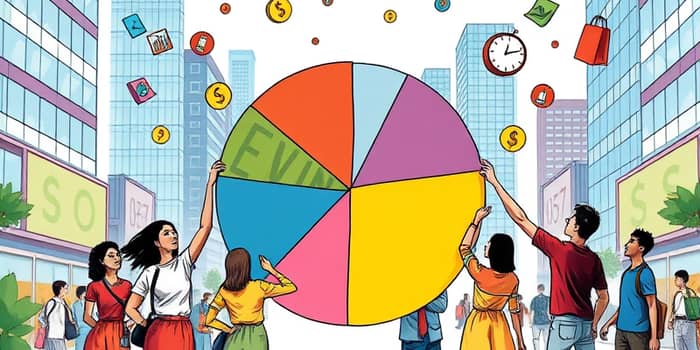
Every day, your choices—from the coffee you buy to the career you pursue—send ripples through the economic landscape.
Consumer spending drives ~70% of U.S. GDP, making personal decisions a powerful force in national growth.
This individual influence is not just a statistic; it's a dynamic reality that shapes employment, business success, and global trends.
As we navigate an era of rapid change, understanding how you impact the economy can empower you to make smarter financial moves.
By mastering your market, you can turn everyday actions into opportunities for resilience and prosperity.
Consumer Spending: The Heartbeat of the Economy
When you open your wallet, you're fueling an engine that powers everything from local shops to multinational corporations.
Rising spending lifts GDP and creates jobs, while pullbacks can signal slowdowns or recessions.
Businesses like Apple and Amazon thrive on this demand, linking your purchases directly to economic health.
Key reasons why your spending matters include:
- It directly contributes to quarterly GDP growth, often accounting for the majority of it.
- It supports employment across diverse sectors, from retail to technology.
- It drives innovation as companies respond to consumer preferences.
- It reflects consumer confidence, influencing stock markets and investment flows.
Real personal consumption expenditures reached $15.1T in 2022, showing the massive scale of individual impact.
Even with nominal growth slowing, services make up about two-thirds of spending, highlighting shifts in priorities.
The Two-Track Economy: Spending Divergence by Income
Income inequality has created a stark divide in how different groups influence the economy.
High-income households, the top 20-25%, now account for over half of total consumption, a share that has grown significantly.
Their spending focuses on discretionary items like travel and luxury goods, propelling aggregate growth.
In contrast, lower-income groups face strains from inflation and higher costs, concentrating on essentials.
This divergence means that:
- Top earners drive post-2022 aggregate growth with more financial cushion and lower credit use.
- Lower-income households are vulnerable to economic shocks, often relying on credit for necessities.
- Policy concerns arise over economic fragility despite some stability from concentrated spending.
The table below summarizes key forecasts for 2026, illustrating how these trends might evolve:
Understanding this split can help you navigate your own financial strategy, whether you're saving for essentials or investing in luxuries.
Policy Shifts: Your Personal Fiscal Landscape
Government policies, such as tax reforms, directly shape your disposable income and spending patterns.
For example, higher SALT deduction caps benefit high-tax regions, while tax-free tips boost service workers' earnings.
These changes lead to divergent effects: high-income individuals may spend on luxuries, while others focus on essentials or savings.
However, headwinds like tariffs and slower migration can curb purchasing power, especially for lower incomes.
Practical steps to leverage policy impacts include:
- Staying informed about local and federal tax changes to optimize your budget.
- Adjusting spending habits based on disposable income shifts from new laws.
- Building an emergency fund to buffer against economic uncertainties.
- Advocating for policies that support financial equality in your community.
Tax reforms in 2026 are expected to influence regional spending, with the Northeast seeing potential boosts.
By proactively managing your finances, you can turn policy winds into tailwinds for personal growth.
Demographic Dynamics: Who's Spending and Why
Age and sentiment play crucial roles in how individuals influence economies.
Gen Z and Millennials, in their peak earning years, are spending more than average, outpacing other groups.
This demographic shift drives trends in technology, wellness, and sustainable products.
Consumer sentiment reveals that many feel the economy isn't working for them, with rising living costs and financial strains.
Key behavioral influences to consider are:
- Younger cohorts prioritize experiences and digital services, shaping market demand.
- Sentiment fluctuations can lead to cautious spending, affecting overall economic momentum.
- Sector breakdowns show services dominating, but goods spending remains vital for certain industries.
Gen Z and Millennials spent 5.9% more month-to-date in May, highlighting their growing economic clout.
Embracing these trends can help you align your spending with evolving market opportunities.
Future Focus: Navigating 2026 and Beyond
Looking ahead, forecasts suggest modest growth, but individual responses will determine economic outcomes.
High-income resilience may buffer downturns, yet widening gaps call for cautious financial planning.
Global ties mean U.S. consumer behavior impacts worldwide growth, adding to your influence.
Potential shocks like tariffs or fiscal uncertainty require preparedness to maintain stability.
To master your market in the coming years, focus on these actionable strategies:
- Diversify your income streams to reduce reliance on a single source.
- Monitor economic indicators like job reports and spending data to make informed decisions.
- Invest in skills and education to adapt to changing labor markets.
- Engage in community initiatives to support local economies and resilience.
- Use technology to track spending and savings, optimizing your financial health.
Consumer confidence cycles directly spur stocks and revenue, so maintaining optimism can have broader benefits.
By taking charge of your economic role, you can contribute to a more robust and equitable future for all.
References
- https://usa.visa.com/partner-with-us/visa-consulting-analytics/economic-insights/5-key-economic-forces-shaping-2026.html
- https://www.gpec.org/blog/consumer-spendings-impact-on-the-economy/
- https://www.firstcommand.com/coaching-center/insights/annual-market-and-economic-outlook/
- https://www.invesco.com/qqq-etf/en/innovation/consumer-spending-a-window-into-the-us-economy.html
- https://maristpoll.marist.edu/polls/2026-economic-outlook-december-2025/
- https://www.richmondfed.org/research/national_economy/macro_minute/2025/consumer_spending_by_people_for_people
- https://www.deloitte.com/us/en/insights/topics/economy/global-economic-outlook-2026.html
- https://www.bostonfed.org/publications/current-policy-perspectives/2025/why-has-consumer-spending-remained-resilient.aspx
- https://www.stlouisfed.org/on-the-economy/2025/dec/professional-forecasters-past-performance-outlook-2026
- https://www.jpmorgan.com/insights/global-research/economy/consumer-spending
- https://www.spglobal.com/market-intelligence/en/news-insights/research/2025/12/top-10-economic-insights-2026
- https://www.dallasfed.org/research/economics/2025/1125-yang-consume
- https://www.morganstanley.com/insights/articles/global-economic-outlook-2026
- https://www.brickleywealth.com/learn/how-consumer-spending-supports-the-economy-and-markets
- https://www.uschamber.com/economy/what-to-expect-from-the-economy-in-2026