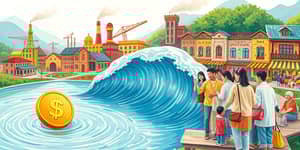
In the complex landscape of global markets, the tension between expansion and plateau often shapes our future. Every business, policymaker, and individual must understand the forces that drive economies forward or hold them back. By examining these cycles in depth, we gain the insight needed to navigate challenges and seize new opportunities.
Understanding Economic Growth
Economic growth represents a phase where national output, employment, and incomes rise steadily. In practical terms, growth emerges when annual GDP increases exceed 2–3%, signaling robust activity across industries. Investors spot this trend in rising equities, while workers benefit from wage increases and higher living standards. Consumers, feeling confident, boost spending on goods and services, fueling a virtuous circle of opportunity.
Innovation often accelerates during growth periods. Historical surges—like the technology boom of the 1980s—demonstrate how breakthroughs translate into productivity gains and wealth creation. Governments may support this phase through targeted incentives, reinforcing the cycle of prosperity.
Recognizing Economic Stagnation
Stagnation is defined by sluggish or negligible expansion, typically under 2–3% GDP growth. Prolonged plateaus can erode consumer confidence and deter investment. In stagnation phases, unemployment remains high, wages stall, and demand falls short of potential. The result is a prolonged period of low growth that can last years—as seen in parts of Europe and Japan over the past two decades.
Unlike short recessions, stagnation drags on, creating a sense of inertia. Businesses face tighter margins, hiring freezes, and diminished innovation. Individuals confront uncertain job markets and limited career mobility. Overcoming these challenges requires a clear-eyed view of underlying causes and decisive actions.
Types of Economic Stagnation
Not all stagnation looks the same. Experts identify distinct categories, each demanding tailored responses:
- Cyclical Stagnation: A temporary pause between contraction and expansion, often remedied by quick policy moves.
- Structural Stagnation: Arises during long-term shifts like industrial retooling; duration depends on reform pace.
- Secular Stagnation: A deep, lasting malaise driven by aging populations, low demand, and negative natural interest rates.
- Stagflation: Combines stagnation with high inflation, creating a uniquely challenging environment.
Historical Lessons and Turning Points
The 1970s U.S. stagflation era exemplifies adversity spurring decisive action. After oil shocks and soaring prices, policymakers enforced aggressive interest rate hikes that, while painful, paved the way for the technology-led boom of the 1980s. Meanwhile, the Great Recession of 2007–2009 underscored the power of quantitative easing and fiscal stimulus in shortening downturns and restoring confidence.
Japan’s experience since the 1990s offers a cautionary tale of entrenched secular stagnation, where deflationary pressures and demographic decline subdued growth. Learning from these episodes, governments today calibrate monetary and fiscal tools more dynamically, aiming to preempt extended slowdowns before they solidify.
Indicators to Track
Whether you’re a small business owner or a policy advisor, monitoring key signals can guide proactive strategies. Essential metrics include:
- GDP and GDP per capita
- Unemployment and labor force participation rates
- Wage growth and household income trends
- Consumer spending and business investment levels
- Interest rates and inflation expectations
By tracking key economic metrics regularly, stakeholders can anticipate shifts and allocate resources more effectively.
Policy Paths from Stagnation to Growth
Turning a stagnant economy around often relies on a mix of fiscal and monetary measures. Historical data shows combinations of spending increases, tax relief, and credit expansion yield the strongest recoveries.
Practical Steps for Businesses and Individuals
Beyond macro policies, localized actions matter. Companies can focus on innovation pipelines, digital transformation, and workforce training. Pursuing investing in research and innovation ensures long-term competitiveness, even in sluggish markets.
Individuals should consider upskilling, exploring emerging industries, and diversifying income streams. Building personal financial resilience—through emergency savings and debt management—creates a buffer against broader downturns. Communities can champion local entrepreneurship and support networks, fostering building resilient communities and businesses that thrive amid uncertainty.
Conclusion: Embracing Change and Sustained Prosperity
Economic cycles of growth and stagnation are inevitable, yet not immutable. With foresight, collaboration, and targeted action, societies can shorten downturns and extend expansions. By learning from history, monitoring critical indicators, and fostering innovation, we cultivate an environment where every stakeholder—government, business, and individual—participates in a more resilient future.
As we navigate the next cycle, let us turn challenges into catalysts, ensuring that each phase of economic life delivers new opportunities for prosperity and progress.
References
- https://www.poems.com.sg/glossary/financial-terms/stagnation/
- https://en.wikipedia.org/wiki/Economic_stagnation
- https://fiveable.me/key-terms/apush/economic-stagnation
- https://www.netsuite.com/portal/resource/articles/business-strategy/stagflation-vs-recession.shtml
- https://www.balentine.com/insights/economic-cycle