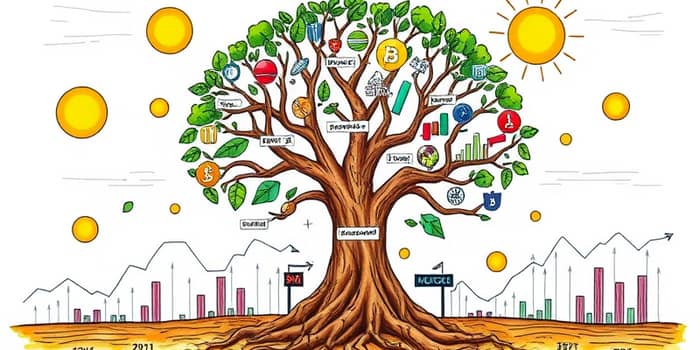
As we approach 2025, the global financial landscape is undergoing profound transformations that demand a reevaluation of traditional investment strategies.
Strategic diversification beyond borders is emerging as a critical approach to safeguarding and growing wealth in an uncertain world.
The concentration of U.S. equities in technology sectors and the persistent strength of the dollar pose significant risks for portfolios lacking international exposure.
Home country bias has left many investors vulnerable to localized economic shocks and missed opportunities abroad.
This article aims to inspire and equip you with practical insights to navigate these challenges.
By embracing global market opportunities, you can enhance your portfolio's resilience and unlock new avenues for growth.
The Driving Forces Behind Diversification
In recent years, the correlation between U.S. stocks and bonds has shifted, undermining the effectiveness of classic 60/40 portfolios.
Positive stock/bond correlations mean that traditional hedges may fail during market downturns.
Moreover, U.S. equity markets are increasingly concentrated in a few tech giants, amplifying risks.
U.S. equity index concentration from AI and tech innovations creates volatility that can be mitigated through international diversification.
Key statistics highlight this urgency.
For instance, 77.5% of advisor equity portfolios remain in U.S. assets, up from 70% in 2018.
This home bias has cost investors significant gains from global markets.
These metrics underscore the need to look beyond domestic markets.
Global diversification is not just about risk mitigation; it's a strategic move to capture uncorrelated returns.
Unlocking Regional Opportunities
International equities offer compelling avenues for growth, with specific regions showing strong potential in 2025.
European financials and aerospace sectors are benefiting from regulatory changes and increased defense spending.
- Japan: With wage growth and corporate governance reforms, currency tailwinds make it a tactical buy for investors seeking exposure to Asia.
- Europe: The MSCI EAFE ETF's performance highlights resilient developed markets that can diversify U.S.-centric portfolios.
- Emerging Markets: Despite challenges, countries like Brazil have seen significant gains, offering opportunities for those willing to navigate volatility.
Factors such as international value and quality stocks provide alpha with higher yields versus U.S. counterparts, adding another layer of diversification.
Embracing Alternatives and Non-Traditional Assets
To further enhance portfolio resilience, incorporating alternatives is essential.
Liquid alternatives have become a top pick for clients, offering alpha and low correlations to traditional assets.
- Digital Assets: These provide diversification from U.S. concentration and exposure to innovative financial technologies.
- Commodities and Gold: Serving as buffers, they help manage positive stock/bond correlations and inflation risks.
- Hedge Funds and Low-Vol Stocks: These assets offer crisis Sharpe ratios and low correlation to the World Portfolio, enhancing stability.
Income strategies complement these approaches, ensuring regime endurance across different market conditions.
Navigating Risks and Challenges
The path to diversification is fraught with risks that must be managed.
U.S.-specific risks like equity concentration and dollar strength require proactive strategies.
- Geopolitical Tensions: Trade tariffs and supply chain disruptions, especially in Europe and semiconductor sectors, can impact global markets.
- Inflation Persistence: Ongoing inflationary pressures undermine traditional portfolio strategies, necessitating inflation-protected assets.
- Concentration Traps: Over-reliance on tech or crypto bets has faltered, reminding us that no single market dominates forever.
By understanding these challenges, investors can better prepare their portfolios.
Strategic responses include shifting from fixed income into alternatives and increasing non-dollar exposures.
Strategic Portfolio Frameworks for 2025
Adopting a robust framework is key to successful diversification.
Beyond benchmarks, consider the World Portfolio approach with international and FX management.
- Multi-Asset Strategies: These capture innovation, provide inflation protection, and mitigate risks through diversified holdings.
- Morgan Stanley's Recommendations: For 2025, they emphasize maximum diversification amid U.S. economic stalls and election uncertainties.
- Implementation Tools: Utilize ETFs for international factors and platforms like Risevest for global access, making diversification practical.
These frameworks help investors move beyond home bias and embrace a global investment mindset.
Contrasting Viewpoints and Balanced Insights
While most experts advocate for diversification, some counterpoints exist.
For instance, BCG suggests that corporate focus beats diversification in certain contexts, but this is more relevant to corporate strategy than individual portfolios.
However, for investors, the consensus from firms like BlackRock and Goldman Sachs is clear.
Global asset diversification is crucial for resilience in 2025, given the unpredictable nature of markets.
Practical Steps for Immediate Action
To get started, here are actionable steps you can take today.
Assess your current portfolio for U.S. concentration and identify gaps in international exposure.
- Reallocate Assets: Consider shifting a portion from overweight U.S. equities into international funds or ETFs.
- Explore Alternatives: Allocate to liquid alts and digital assets to diversify risk and capture new growth.
- Monitor Global Trends: Stay informed on regional developments and geopolitical shifts to adjust your strategy proactively.
- Use Technology: Leverage investment platforms that offer easy access to global markets and alternative assets.
- Consult Professionals: Seek advice to tailor a diversified portfolio framework that aligns with your goals and risk tolerance.
By taking these steps, you can build a portfolio that is not only resilient but also positioned to thrive in the dynamic global markets of 2025.
Embracing diversification is a journey towards financial empowerment and long-term success.
Remember, history shows that markets rotate, and adaptability is key.
With tools and insights at your disposal, you can navigate the uncertainties ahead with confidence.
Start today by evaluating your investments and considering a more global perspective.
The future belongs to those who think beyond borders and act with strategic foresight.
References
- https://www.blackrock.com/us/financial-professionals/insights/investment-directions-fall-2025
- https://risevest.com/blog/why-diversification-is-more-important-than-ever-in-2025
- https://www.ishares.com/us/insights/investment-directions-fall-2025
- https://www.goldmansachs.com/insights/articles/how-to-build-a-global-investment-portfolio-for-the-next-decade
- https://www.bcg.com/publications/2025/market-performance-focus-beats-diversification
- https://www.morganstanley.com/ideas/2025-market-outlook-portfolio-diversification
- https://www.mckinsey.com/industries/private-capital/our-insights/global-private-markets-report
- https://www.ssga.com/us/en/institutional/insights/mind-on-the-market-29-august-2025