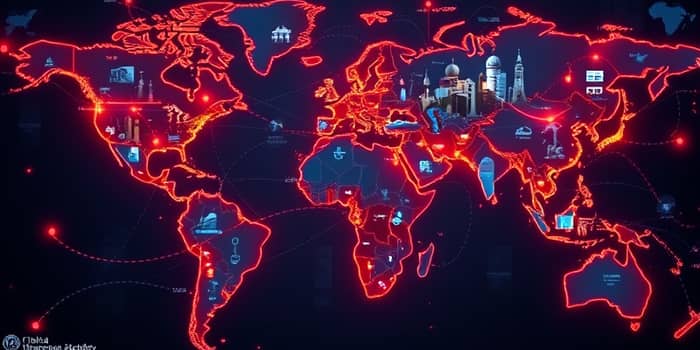
In an ever-evolving world, the interplay between political power and economic forces shapes our collective future. From trade disputes to armed conflicts, geoeconomic tension is the leading risk identified by global experts for 2026. For businesses, investors, and policymakers alike, understanding these dynamics is not merely academic—it is essential for survival and growth in a fragmented and multipolar environment.
Global Risks Shaping Our World
The latest assessments rank geoeconomic confrontation as the top near-term hazard, rising eight spots year over year. State-based armed conflicts, societal polarization, and entrenched inequality all feature prominently, threatening supply chains and social fabrics. With 68% of experts expecting a multipolar or fragmented order over the next decade, we face an era where old alliances strain and new blocs emerge.
Economic downturns, inflationary pressures, and asset bubbles loom large. Firms and nations must navigate these crosswinds with agility. This is not a moment to wait for clarity—prioritize risk management and scenario planning now to stay ahead of sudden shocks.
Geopolitical Flashpoints and Emerging Tensions
From the South China Sea to Eastern Europe, tensions are mounting. The US-China rivalry extends beyond tariffs into technology decoupling, while the Ukraine-Russia conflict persists as a stark reminder of the human and economic costs of war. Meanwhile, the Middle East teeters on shifts in Iran-Israel relations and potential Saudi-Israel normalization, a game changer that could redefine regional stability.
Political transitions in Tehran, US-Venezuela negotiations, and US-Europe disputes over tariffs and territorial claims add complexity. In Asia, multiple flashpoints underline that societal polarization threatens social cohesion across borders and cultures.
Trade, Supply Chains, and Structural Shifts
As geopolitical risks rise, nearly two-thirds of global trade flows through value chains under reconfiguration. Companies are diversification of supply chains is crucial—relocating production closer to key markets, securing alternative suppliers, and investing in digital transparency. These moves seek to mitigate the impact of sudden tariff hikes and export controls.
- Tariff rates in the US have more than sextupled in the past year.
- New bilateral trade pacts are supplanting WTO norms.
- Regional trade deals aim to open markets to billions of consumers.
Yet these restructurings carry their own costs: higher production expenses, logistical complexities, and investment uncertainties. Policymakers and corporate leaders must balance resilience with efficiency.
Economic Indicators and Market Implications
Global growth is forecast at 2.6% in 2026, with developing economies (excluding China) projected to expand by 4.2%. However, rising debt levels, mounting inflation risks, and potential asset bubbles cast a shadow. Energy price volatility, defense spending surges, and currency shifts—particularly debates over de-dollarization—are set to define investment landscapes.
Investors must embrace flexible and adaptive strategies that anticipate both upside and downside scenarios. Sectoral winners may include critical infrastructure, cybersecurity, and renewable energy, while traditional industries could face prolonged headwinds.
Scenario Planning for Uncertain Futures
In a world of deep uncertainty, scenario planning transcends simple forecasting. It invites stakeholders to envision alternate realities: from a cooperative multilateral renaissance to a fragmented Cold War–style stalemate. By stress-testing strategies against divergent outcomes, organizations cultivate resilience and agility.
- Define baseline, optimistic, and pessimistic geopolitical scenarios.
- Assess supply chain vulnerabilities under each scenario.
- Adjust capital allocation to hedge against systemic shocks.
Such exercises foster informed decision-making and guard against the pitfalls of single-track planning, especially when rapid policy shifts can upend market assumptions overnight.
Practical Steps for Businesses and Investors
How can you transform geopolitical insight into tangible action?
- Develop a geopolitical risk dashboard combining real-time data and expert analysis.
- Invest in robust compliance and crisis-management frameworks.
- Strengthen partnerships with local stakeholders to navigate regulatory changes.
- Allocate capital to diversified asset classes, including emerging market debt and inflation-protected securities.
By invest in diversified asset allocations and forging resilient networks, firms can weather disturbances while capturing growth in emerging corridors.
The Role of Leadership and Collaboration
Leaders must cultivate a culture that values foresight, open communication, and ethical conduct. Promoting cross-functional collaboration—across legal, finance, supply chain, and security teams—ensures a holistic approach to risk. International cooperation, even amid rivalry, can unlock shared solutions to climate change, health crises, and cybersecurity threats.
To thrive, organizations must foster cross-border partnerships and resilience, bridging national divides to tackle common challenges and harness collective strengths.
Conclusion: Charting a Path Forward
The nexus of geopolitics and global markets will remain dynamic and, at times, turbulent. Yet within this complexity lie opportunities for innovation, collaboration, and sustainable growth. By staying informed, agile, and proactive, stakeholders can transform uncertainty into strategic advantage.
Remember to stay informed and proactive, continuously refine your scenarios, and invest in capabilities that enhance both resilience and adaptability. In doing so, you will not only navigate the currents of global change but also help shape a more stable and prosperous world.
References
- https://www.weforum.org/press/2026/01/global-risks-report-2026-geopolitical-and-economic-risks-rise-in-new-age-of-competition/
- https://www.wellington.com/en-us/institutional/insights/geopolitics-in-2026-risks-and-opportunities-were-watching
- https://www.aberdeenplc.com/en-gb/news-and-insights/january-2026-macro-outlook-geopolitical-risks-and-global-market-implications
- https://privatebank.jpmorgan.com/nam/en/insights/audio-and-webcasts/webcasts/geopolitical-market-impacts-and-investment-perspectives-for-2026
- https://unctad.org/publication/global-trade-update-january-2026-top-trends-redefining-global-trade-2026
- https://www.bcg.com/publications/2025/geopolitical-forces-shaping-business-in-2026
- https://www.ey.com/en_gl/insights/geostrategy/geostrategic-outlook
- https://www.spglobal.com/ratings/en/regulatory/article/global-sovereign-rating-trends-2026-geopolitical-risks-could-destabilize-credit-quality-dynamics-s101667695
- https://www.fitchratings.com/research/sovereigns/geopolitical-tensions-raise-emerging-market-credit-risks-in-2026-29-01-2026