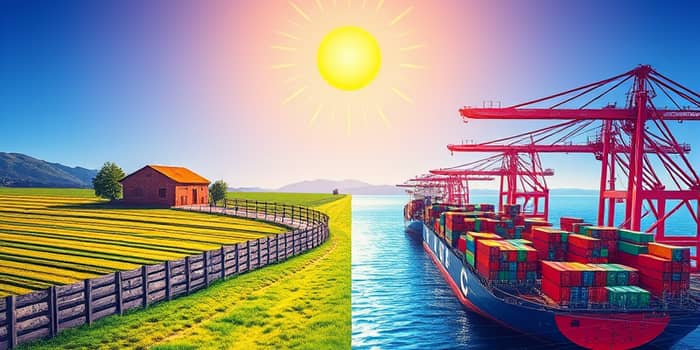
In an era of rapid globalization and shifting political tides, the tension between unrestricted exchange and guarded markets has never been more pronounced. Nations wrestle with the choice between embracing open borders for commerce and shielding local industries from foreign pressures. This debate shapes policies that affect everyday lives, from the price of groceries to the job security of entire communities.
Understanding the contours of this discussion is essential for leaders, businesses, and citizens alike. By examining the roots and consequences of each approach, we can forge a path that honors both national interests and global cooperation.
Historical Context and Economic Foundations
The philosophical battle between protectionism and free trade stretches back centuries. Mercantilist policies of the 16th and 17th centuries favored hoarding wealth and restricting imports. In contrast, classical economists like Adam Smith and David Ricardo championed specialization and free exchange.
Ricardo’s theory of comparative advantage demonstrated that even when one nation is more efficient at producing all goods, trade remains beneficial if countries focus on what they do best. Similarly, the division of labor unlocks productivity gains by assigning tasks to those most skilled at them.
The Case for Protectionism
Protectionist policies impose tariffs, quotas, and non-tariff barriers to limit foreign competition. Governments often defend these measures as essential to preserve domestic jobs and industries.
- empower domestic firms through supportive measures
- Safeguard strategic sectors like defense, energy, and food
- Reduce dependence on volatile international supply chains
- Promote self-reliance during economic downturns
Yet, shielding markets from competition comes at a cost. Consumers face higher prices, while local businesses may lose the incentive to innovate.
- Risk of retaliatory trade wars and escalating tariffs
- Reduced efficiency and slower long-term growth
- Favoring established firms can stifle new entrants
- May lead to resource misallocation and stagnation
The Case for Free Trade
Free trade seeks to remove barriers and allow goods and services to flow unimpeded. Advocates argue it fosters competition, drives down costs, and expands consumer choice.
- lower barriers and increase market access
- Encourage innovation and specialization across borders
- Boost economic growth through expanded markets
- Strengthen diplomatic ties via interdependence
However, fully open markets can generate winners and losers. Certain communities may suffer job losses when production shifts abroad.
- Potential for outsourcing and domestic unemployment
- Dependency on foreign suppliers for critical goods
- Pressure to lower environmental and labor standards
- Undermining of emerging industries without support
Comparative Overview
Balancing Act: A Hybrid Strategy
Rather than choosing one extreme, many nations adopt a mixed model, applying selective protections for strategic sectors while embracing openness elsewhere. This nuanced stance can:
– Support nascent industries until they can compete globally. – Keep essential goods under national control. – Facilitate innovation and efficiency in mature markets.
By crafting policies that reflect real-world complexities, governments can strike a balance between open and protected markets and foster sustainable growth.
Actionable Steps for Policymakers and Businesses
To navigate this debate with purpose, stakeholders can follow practical guidelines:
- Conduct regular impact assessments on tariffs and quotas.
- Invest in workforce retraining and education.
- Offer targeted subsidies for emerging technologies.
- Negotiate trade agreements with clear environmental standards.
- Encourage public-private partnerships for critical infrastructure.
These steps help ensure that policies remain responsive to changing global dynamics while protecting domestic interests.
Conclusion: Toward Inclusive Global Prosperity
Free trade and protectionism represent two sides of a complex coin. When wielded thoughtfully, each tool can contribute to national well-being and collective progress. By embracing a strategy that combines openness with prudent safeguards, nations can build resilience through strategic policy design and drive sustainable development for future generations.
The ultimate goal is not to eliminate debate but to channel it into constructive action that balances economic efficiency with social equity. In doing so, we can shape a global economy that benefits all, forging partnerships that transcend borders and uplift communities everywhere.
References
- https://simplicable.com/new/protectionism-vs-free-trade
- https://gomoon.ai/blog/protectionism-vs-free-trade
- https://www.braumillerconsulting.com/protectionism-or-free-trade/
- https://www.tni.org/en/article/the-false-dilemma-between-protectionism-and-free-trade
- https://citizensassembly.co.uk/trade-free-trade-v-protectionism/
- https://www.youtube.com/watch?v=_tmPnH-JkNg
- https://www.independent.org/article/2025/01/24/recommended-readings-on-free-trade-versus-protectionism/
- https://www.wita.org/blogs/the-tariff-tug-of-war/