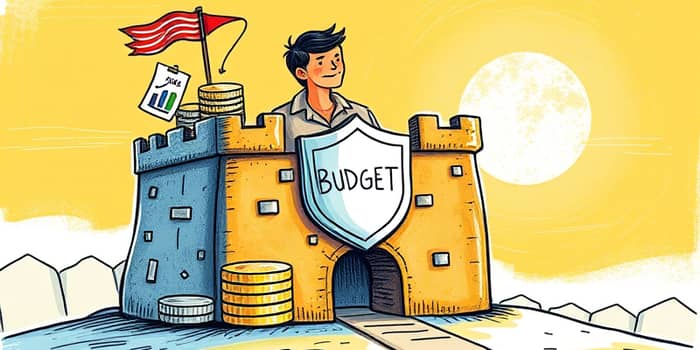
In today's unpredictable economy, financial security often feels like a distant mirage. With rising costs and stagnant wages, the dream of stability can seem unattainable for many.
Financial security is not a luxury it is a fundamental need that shields us from life's uncertainties. This article delves into the harsh realities of financial insecurity and provides a practical guide to constructing your own financial fortress through a personal budget.
The statistics reveal a sobering truth: fewer than half of Americans consider themselves financially secure. This pervasive sense of insecurity cuts across generations, highlighting a widespread crisis.
Nearly half of U.S. adults are dissatisfied with their current income, fueling a deep-seated anxiety about financial futures. This discontent underscores the urgent need for effective money management strategies.
At the core of this issue lies the emergency savings gap. A majority of Americans understand the importance of having at least three months of expenses saved, yet only a fraction have achieved this milestone.
Inadequate emergency fund coverage exposes individuals to significant risk, making personal budgeting an essential tool for resilience. By taking control of your finances, you can build a buffer against unexpected shocks.
The State of Financial Insecurity
Financial insecurity is a pervasive challenge affecting millions. Recent data indicates that only 43% of Americans feel financially secure.
Generational disparities are stark, with Gen X reporting the highest levels of insecurity at 54%. Millennials and Baby Boomers also struggle, reflecting a broad-based issue.
Income dissatisfaction compounds this problem, with nearly half of adults unhappy with their earnings. This dissatisfaction drives a behavioral shift towards caution.
Three in four Americans have become more careful with money, a trend especially strong among older generations. This caution is a positive first step, but it must be harnessed through structured budgeting to yield lasting security.
The Emergency Savings Crisis
Emergency savings serve as the bedrock of financial stability, yet they are critically lacking. 85% of Americans desire three months of expense coverage, but only 46% have it.
For six months of expenses, the gap widens: 63% need it, but only 27% have achieved it. This shortfall leaves families vulnerable to crises.
Generation-specific gaps are alarming. Gen Z faces the steepest challenge, with 34% having no emergency savings and only 10% with six months' coverage.
Millennials show 28% with no savings and 25% with adequate coverage. Gen X and Baby Boomers fare slightly better, but struggles persist across all age groups.
Moreover, only 41% of Americans can cover a $1,000 expense from savings, the lowest rate since 2021. One in five individuals couldn't handle a $500 emergency.
Emergency funds are often depleted, with 53% withdrawing money in the past year. The average withdrawal totaled $2,900, straining financial stability.
Misuse is another concern, as 27% spend emergency savings on non-essentials. Gen Z and women are more likely to do this, undermining their financial safety nets.
Demographics and Disparities in Savings
Financial security varies widely based on region, gender, education, and income. Southern and Midwestern states have higher rates of no emergency savings.
Gender differences show men are more successful at building savings, with 21% increasing them compared to 16% of women.
Generational progress is mixed: Gen Z leads in increasing savings at 28%, but overall coverage remains low. Education has a significant impact, with college graduates twice as likely to grow savings.
Family status and income also play crucial roles. Non-parents and higher earners are more likely to save successfully, highlighting systemic inequalities.
To illustrate the cumulative advantage of age, here is a table of median savings by generation:
This data underscores the importance of starting early and maintaining consistent savings habits over time.
Barriers to Building Savings
Several obstacles hinder the growth of emergency savings. Economic headwinds are primary, with 73% saving less due to inflation and rising prices.
Income fluctuations are a key driver, as those with increased savings often report higher earnings. Conversely, decreased savings correlate with reduced income.
Spending on necessities drains resources, with 69% of those with decreased savings spending more on basics. Common barriers include:
- High inflation and elevated interest rates
- Stagnant or reduced household incomes
- Increased cost of living for essentials
- Lack of financial education and planning
- Psychological factors like shame and stress
Additionally, 8 in 10 Americans haven't increased emergency savings since 2025, indicating persistent challenges. To overcome these, a personal budget can provide clarity and control.
Steps to Construct Your Financial Fortress
Building financial security begins with creating a personal budget. This process involves assessing your current situation and setting clear goals.
First, track all income and expenses to understand your cash flow. This foundational step reveals spending patterns and areas for improvement.
Next, prioritize goals such as emergency savings, debt repayment, and long-term investments. Key steps to implement include:
- Track every expense for a month to identify leaks
- Categorize expenses into needs, wants, and savings
- Use the 50/30/20 rule: 50% for needs, 30% for wants, 20% for savings and debt
- Automate savings contributions to ensure consistency
- Review and adjust your budget monthly to stay on track
Emergency savings should be a top priority, aiming for three to six months of expenses. Strategies to overcome barriers include:
- Cut unnecessary subscriptions and reduce dining out
- Negotiate bills or seek additional income streams
- Use financial apps to monitor spending and savings
- Seek advice from financial experts or support groups
Remember, consistency is key. Small, regular contributions can build significant savings over time, fortifying your financial position.
The Emotional Journey of Financial Management
Financial management is not just about numbers; it involves deep emotional elements. Nearly a quarter of Americans feel ashamed of their savings habits.
This shame can lead to avoidance, exacerbating financial problems. Acknowledging these feelings without judgment is crucial for progress.
Younger generations believe saving is harder today, with 89% citing increased challenges. This perception can demotivate, but it also highlights the need for resilience.
Positive steps are being taken, as 72% of young adults improved their financial health in the past year. Emotional benefits of budgeting include:
- Reduced stress and anxiety about money
- Increased confidence in handling emergencies
- A sense of control and empowerment over finances
- Improved relationships by reducing financial conflicts
Building a financial fortress requires mental strength as much as fiscal discipline. Embrace the journey with patience and self-compassion.
Looking Forward with Hope and Action
Despite the challenges, there is reason for optimism. A third of Gen Z and Millennials plan to save more in the coming year.
Overall, 65% of Americans expect their savings to grow, indicating a hopeful outlook. However, only 37% expect better personal finances soon.
To sustain progress, focus on long-term habits. The average American started saving at age 30, but it's never too late to begin.
Final actions to take for lasting security include:
- Start budgeting today, no matter how small the initial steps
- Celebrate milestones to maintain motivation and momentum
- Educate yourself on personal finance through books or courses
- Support others in their financial journeys to foster community
Financial security is achievable with a personal budget. By building your financial fortress, you can weather any storm and secure a brighter, more stable future for yourself and your loved ones.
References
- https://yougov.com/en-us/articles/52938-what-americans-think-about-saving-budgeting-and-debt-in-2025
- https://www.bankrate.com/banking/savings/emergency-savings-report/
- https://www.federalreserve.gov/publications/2025-economic-well-being-of-us-households-in-2024-savings-and-investments.htm
- https://www.credible.com/personal-finance/american-savings-statistics
- https://newsroom.bankofamerica.com/content/newsroom/press-releases/2025/07/confronted-with-higher-living-costs--72--of-young-adults-take-ac.html
- https://www.pewresearch.org/short-reads/2025/05/07/growing-share-of-us-adults-say-their-personal-finances-will-be-worse-a-year-from-now/
- https://www.jpmorganchase.com/institute/all-topics/financial-health-wealth-creation/household-finances-pulse-through-may-2025
- https://carry.com/learn/how-financially-literate-is-america-key-stats
- https://www.nefe.org/news/2025/04/financial-well-being-in-america-trend-analysis.aspx