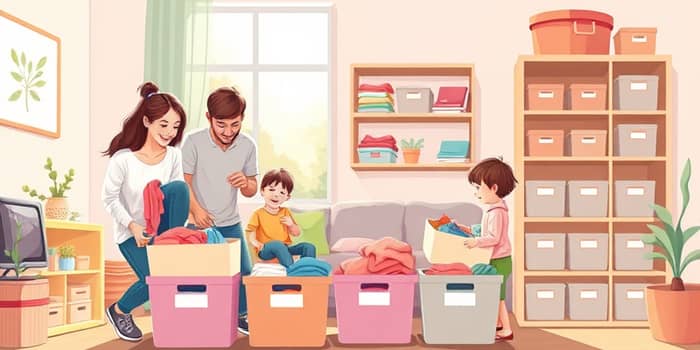
Clutter affects our finances, relationships, and well-being, especially when shared with loved ones. In this guide, discover how a family-focused plan delivers both a renewed sense of control and lasting savings.
Understanding the Cost of Clutter
In the UK, 1 in 3 adults spends up to five minutes each day searching for misplaced items. Imagine losing up to 60 minutes at a time – nearly 7 hours a week wasted. Annually, Brits value their household belongings at £58,210, a 38% increase since 2019. Yet much of that value sits hidden under a mountain of stuff.
Beyond time, clutter slashes focus by 20% and contributes to restless nights. On average, the British spend £400 a year on clothing and shoes alone, roughly the cost of running a car each month. By tackling clutter, families can harness both financial and emotional benefits.
Family Dynamics and Clutter
Clutter often fuels conflict: 31% of UK adults have argued with household members over mess. Parents spend £188 annually on toys and games, versus £148 for adults overall, adding to the chaos. Addressing clutter is not just a solo mission; it’s a shared journey.
- 1 in 3 families report disputes due to disorganization
- Parents often store toys for months without use
- Sentimental items can heighten emotional attachment, making donations hard
Step-by-Step Decluttering Strategies
Follow these actionable steps to bring order and savings into your home:
- Identify the root cause: Understand why items accumulate. It’s rarely laziness.
- Create a clear plan and timeline: Break tasks into daily or weekly goals.
- Avoid adding more clutter: Postpone buying storage containers until after purging.
- Implement a system for efficiency: Dedicate 15 minutes per day to sorting into keep, toss, and donate piles.
- Prioritize quick wins: Tackle visible areas like the kitchen pantry or living room surfaces first.
- Apply these principles to finances: Simplify accounts, automate bills, and cancel unused subscriptions.
Budget-Friendly Solutions
Decluttering on a tight budget is entirely possible with everyday items:
- Use shoeboxes or clementine crates for low-cost storage
- Decorate plain boxes with wrapping paper for a stylish touch
- Employ the “Maybe Box” approach: store uncertain items for one year, then donate if unused
- Implement a time-limited shopping ban to curb impulse purchases
These methods ensure that every purchase is intentional and every item earned its place.
Maintaining a Clutter-Free Home
Consistency is key. Schedule regular check-ins to prevent old habits from returning:
Embracing Lasting Change
Decluttering is more than a one-time event—it’s a lifestyle shift. Families who adopt regular resets enjoy sharper focus, deeper bonds, and a home that nurtures rather than drains them.
Stay connected by making decluttering a shared activity. Turn on your favorite playlist, celebrate each donation drop-off, and track your progress together. These small rituals build momentum and reinforce a practical decluttering strategies for families mindset.
Conclusion
By viewing your space as a financial asset and working as a team, you can unlock hidden value, stop wasteful spending, and reduce household stress. Embrace the journey, one drawer at a time, and discover how decluttering can transform both your environment and your wallet.
References
- https://www.atticstorage.co.uk/blog/decluttering-habits-and-lost-items-statistics/
- https://paradigmlife.net/7-sneaky-ways-decluttering-saves-money/
- https://www.medicalnewstoday.com/articles/how-to-declutter
- https://www.happysimplemom.com/declutter-low-income/
- https://www.endless-storage.com/blog-posts/benefits-of-decluttering
- https://www.thissimplebalance.com/decluttering-on-a-low-income-tips/
- https://www.becomingminimalist.com/clutter-stats/
- https://bemorewithless.com/simple-budget/
- https://www.paigebrunton.com/blog/declutter-items-life-work-2025
- https://www.youtube.com/watch?v=jK5LsDIR7hQ
- https://academic.oup.com/jcr/article/52/2/393/7680547
- https://www.maximumgratitudeminimalstuff.com/2024/08/how-to-declutter-when-your-income-is-small.html
- https://www.hennepin.us/choose-to-reuse/Tips/the-health-benefits-of-decluttering