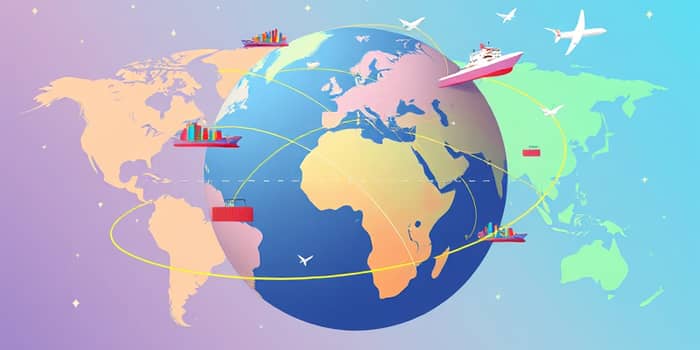
In today's interconnected world, international trade serves as a vital engine for economic growth and prosperity.
It transforms local markets into global arenas, fostering innovation and cultural exchange through simple exchanges.
For newcomers, this field offers a pathway to unlock potential, bridging gaps between diverse economies with every transaction.
Understanding its basics can empower you to participate in a system that has shaped civilizations for centuries.
From ancient trade routes to digital platforms, the evolution of commerce continues to redefine how we connect.
The Essence of International Trade
International trade involves the exchange of goods and services across national borders.
This process allows countries to access resources they lack, enhancing global efficiency.
It is driven by the need for variety, growth, and stronger diplomatic relations.
Key players include exporters, importers, governments, and logistics firms working in harmony.
- Definition: Exchange of goods/services to boost economic activity.
- Importance: Expands market access and builds international ties.
- Features: Includes global markets and complex regulations.
By engaging in trade, nations can specialize in what they do best.
This specialization leads to maximized productivity and lower costs for everyone involved.
Key Theories and Concepts
To grasp trade dynamics, start with foundational theories that explain its mechanics.
Comparative advantage, proposed by David Ricardo, is a cornerstone concept.
It suggests countries should produce goods with the lowest opportunity cost.
For example, one nation might focus on coffee while another excels in steel.
- Comparative advantage: Encourages efficient specialization across borders.
- Rules of origin: Determine product eligibility for tariff benefits in agreements like CUSMA.
- Trade terms: Include Incoterms for shipping responsibilities and payment methods like letters of credit.
Understanding these terms helps navigate the intricate web of global commerce with confidence.
Benefits of Global Commerce
International trade brings numerous advantages that ripple through economies and societies.
It enhances product variety, giving consumers access to goods from around the world.
Economic growth is accelerated as markets expand and efficiencies improve.
- Boosts economic growth through increased market access.
- Enhances product variety and consumer choice.
- Strengthens international ties and fosters resilience, as seen in South-South trade.
Specialization allows nations to leverage their unique strengths globally, creating win-win scenarios.
This interconnectedness deepens economic stability and promotes peaceful cooperation.
Current Trends Redefining Trade in 2026
The trade landscape is evolving rapidly, influenced by technological and geopolitical shifts.
In 2026, trends highlight both opportunities and challenges for global participants.
Slower global growth is expected, with developing countries facing the hardest impacts.
Geopolitical fragmentation, driven by US tariffs, is reshaping trade alliances.
- Tech boom: Asia dominates the chip market, projected to reach $750 billion by 2026.
- Green transitions: EV demand drives trade in critical minerals like cobalt and nickel.
- Regional shifts: Countries like Vietnam and Mexico see export surges due to supply chain adjustments.
- South-South deepening: Over 50% of Africa's exports go to developing markets, enhancing resilience.
These trends underscore the dynamic nature of modern trade, requiring adaptability from all players.
Data from late 2025 shows a mixed outlook, with some sectors thriving amid broader challenges.
Challenges and Risks in International Trade
Despite its benefits, trade faces significant hurdles that can disrupt global flows.
Tariffs and trade wars, such as recent US actions, create uncertainty and higher costs.
Geopolitical instability, like conflicts in regions, can jeopardize supply chains.
- Tariffs: US effective rates around 15% crimp growth and fragment markets.
- Economic risks: Weak demand and financial tightening affect trade volumes.
- Operational challenges: Include currency fluctuations and logistics delays.
Businesses must adapt to navigate these turbulent waters effectively, often through diversification.
For example, European industries are adjusting to tariffs and increased competition from China.
Practical Guide for Beginners
Starting in international trade requires careful planning and a step-by-step approach.
Beginners can follow these actionable steps to build a solid foundation.
- Conduct market research to identify demand and competitors in target regions.
- Ensure legal compliance by understanding export and import laws and documentation.
- Optimize logistics through efficient shipping methods and tracking systems.
- Secure financing options such as trade credit or export loans to support operations.
- Network and build relationships by attending trade fairs and fostering cultural awareness.
Each step helps mitigate risks and capitalize on emerging opportunities in global markets.
Real-world examples, like Vietnam's export growth or Mexico's surge in US imports, offer inspiration.
By learning from these cases, beginners can avoid common pitfalls and succeed.
International trade is not just about transactions; it's about building bridges that enrich our world.
Embrace this journey with curiosity and resilience, and you'll find it rewarding beyond measure.
References
- https://unctad.org/publication/global-trade-update-january-2026-top-trends-redefining-global-trade-2026
- https://www.bea.gov/news/2026/us-international-transactions-3rd-quarter-2025
- https://unctad.org/publication/world-economic-situation-and-prospects-2026
- https://www.anmconsultancy.com/post/international-trade-for-beginners-a-comprehensive-guide
- https://tradedatamonitor.com/datanews/top-10-global-trade-trends-in-2026/
- https://www.edc.ca/en/article/guide-to-common-international-terminology.html
- https://www.bea.gov/news/2026/us-international-trade-goods-and-services-october-2025
- https://academy.iccwbo.org/international-trade/article/what-is-international-trade/
- https://www.youtube.com/watch?v=i6oikNzXWUU
- https://unctad.org/news/10-trends-shaping-global-trade-2026
- https://www.globaltrademag.com/2026-global-trade-outlook-what-to-watch/
- https://www.upskillist.com/blog/everything-you-need-to-know-about-international-trade/
- https://www.census.gov/foreign-trade/schedule.html