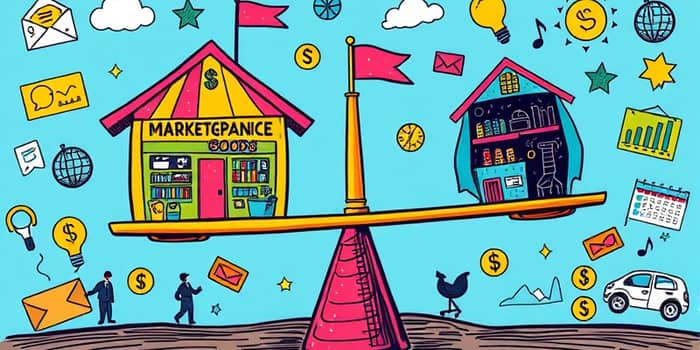
Markets rely on trust and transparent exchange, yet when participants know more than others, inefficiencies arise. Adverse selection threatens to undermine entire industries by allowing hidden drawbacks to drive out quality. By understanding its roots and learning actionable remedies, we can reclaim balanced, thriving markets.
Throughout this article, you will discover how to recognize these patterns, protect your interests, and foster environments where fairness and clarity triumph.
Understanding the Roots of Adverse Selection
At its core, adverse selection emerges from asymmetric information between buyers and sellers. One party holds private knowledge while the other decides based on imperfect signals. This imbalance distorts prices and choices, leading to deterioration of product or service quality across markets.
The principle was famously illustrated by George Akerlof in "The Market for Lemons," where used car sellers knew a vehicle’s true condition but buyers did not. Unable to distinguish high-value cars from faulty ones, buyers offered an average price. Quality vehicles withdrew, leaving only "lemons." When left unchecked, markets can collapse entirely and fail to serve either side.
Real-World Examples that Shape Our Economy
Adverse selection touches many corners of commerce, from consumer purchases to global finance. Consider three classic scenarios:
- Used Car Market: Good cars exit when buyers refuse to pay fair value.
- Insurance Industry: Only high-risk individuals subscribe under average pricing.
- Bank Lending: Borrowers hide true risk, leaving lenders vulnerable.
These examples share a pattern: uninformed actors adjust expectations downward, offering prices that repel quality participants.
How Adverse Selection Unfolds in Markets
Adverse selection proceeds through a series of predictable stages. First, price distortion forces sellers to settle for an average rate, ignoring true value differences. As a result, high-quality providers withdraw, causing the next wave of participants to face only lower-quality options.
This creates an adverse pool of diminishing goods and services. Buyers grow wary, driving prices even lower until the market teeters on collapse. The endgame can be a complete breakdown of trade or a permanent state of low-grade offerings. The welfare loss compared to a transparent market can be immense.
Strategies to Bridge Information Gaps
Fortunately, both policy and market-driven tools exist to counteract adverse selection. By adopting these solutions, businesses and regulators can create a market collapse and failure no longer inevitable.
- Government Regulation: Lemon laws, mandatory disclosures, and enforcement mechanisms.
- Market Mechanisms: Screening processes, third-party certification, and warranties.
- Capital Market Signals: Debt versus equity offerings that reveal management confidence.
Implementing certification, warranties, and public disclosures encourages honest participation. Buyers gain assurance, while sellers with quality offerings command the price they deserve. Over time, transparency fosters healthier competition and sustainable growth.
Building a Fairer, More Transparent Future
Adverse selection need not be an insurmountable barrier. By promoting clear communication, robust verification, and thoughtful policy design, stakeholders can shift market dynamics in favor of trust and quality. Financial institutions, governments, and consumers each play a role in demanding accountability.
At an individual level, stay vigilant: ask questions, seek certifications, and support companies that prioritize openness. At an organizational level, invest in systems that verify identities, verify product history, and share data responsibly. At the policy level, advocate for regulations that balance innovation with consumer protection.
Ultimately, markets flourish when participants operate on a foundation of fairness and clarity. By acknowledging the risk of hidden information and taking concrete steps to reveal true value, we can cultivate trust through transparent communication and build resilient economic ecosystems for everyone.
References
- https://www.meegle.com/en_us/topics/economic/adverse-selection
- https://books.core-econ.org/the-economy/microeconomics/10-market-successes-failures-10-hidden-attributes.html
- https://www.economicshelp.org/blog/glossary/adverse-selection/
- https://www.econinja.net/microeconomics/2-10-market-failure-asymmetric-information
- https://www.moneyandbanking.com/primers/2017/8/13/adverse-selection-a-primer
- https://www.edchoice.org/defining-market-failure-with-examples/
- https://corporatefinanceinstitute.com/resources/wealth-management/adverse-selection/
- https://study.com/academy/lesson/adverse-selection-in-markets.html
- https://www.ebsco.com/research-starters/economics/adverse-selection
- https://en.wikipedia.org/wiki/Adverse_selection
- https://www.youtube.com/watch?v=oT0FgIT7Zak
- https://inomics.com/terms/adverse-selection-1419663