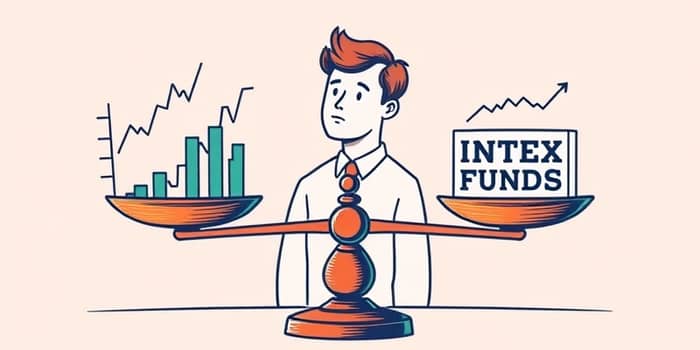
Investing is not just about numbers; it's a journey toward financial freedom and personal fulfillment.
Every decision you make shapes your path, and understanding the core strategies available can transform uncertainty into confidence.
This article explores the active vs. passive investing debate, offering a detailed guide to help you blend both approaches for optimal results.
By diving into costs, performance, and real-world applications, we aim to inspire and equip you with practical tools for lasting success.
Understanding the Core Concepts
Active investing involves a hands-on approach where fund managers actively select securities to outperform the market.
This strategy relies on research, analysis, and frequent trading to capture opportunities and mitigate risks.
In contrast, passive investing adopts a buy-and-hold mentality, tracking market indexes like the S&P 500.
It aims to match market performance rather than beat it, offering simplicity and broad diversification.
The Cost Battle: Fees and Expenses
Costs play a crucial role in investment returns, directly impacting your long-term wealth.
Active funds typically charge higher fees, ranging from 0.2% to 2% of assets under management annually.
These fees cover professional management and frequent trading activities.
Passive funds, however, boast lower expense ratios, often as low as 0.04%.
This significant cost advantage makes passive investing attractive for fee-conscious investors.
- Active investing costs: Higher due to management and trading.
- Passive investing costs: Lower with mechanical, index-based strategies.
Performance Over Time
Historical data reveals that active funds can outperform in certain conditions, especially during volatility.
For instance, during the 2020 market turmoil, nearly 49% of active funds beat their passive counterparts.
Passive investing, on the other hand, shines in bull markets with consistent, long-term returns.
The S&P 500 index funds have historically averaged about 10% annually, providing reliable growth.
- Active performance: Excels in neutral or bear markets.
- Passive performance: Thrives in prolonged growth periods.
Tax Implications and Efficiency
Tax efficiency is another critical factor that influences your net returns.
Passive strategies generate fewer taxable events due to their buy-and-hold nature.
This makes them ideal for tax-advantaged accounts like IRAs or 401(k)s.
Active investing, with its higher turnover, can lead to more capital gains taxes.
However, savvy managers use tax-loss harvesting strategies to mitigate this burden.
- Passive tax advantages: Minimal turnover and capital gains.
- Active tax strategies: Can optimize through separate managed accounts.
Control and Customization
Active investing offers greater control, allowing portfolios to be tailored to specific needs.
Investors can manage concentrated positions or align investments with personal values.
Passive investing provides less customization, as holdings are dictated by index rules.
Yet, it allows for easy asset allocation adjustments, such as shifting between stocks and bonds.
- Active control: High, with options for legacy positions and risk constraints.
- Passive control: Limited to fund distributions and rebalancing.
Flexibility in Market Volatility
Market volatility tests the resilience of any investment strategy.
Active investing can react nimbly to economic changes, capitalizing on short-term trends.
This flexibility is a key strength in turbulent times, offering potential protection.
Passive investing, while stable, may fully expose you to market downturns without active intervention.
- Active flexibility: Agility in volatile conditions.
- Passive approach: Matches market performance with periodic rebalancing.
The Hybrid Strategy: A Balanced Approach
Blending active and passive strategies creates a core-satellite approach that balances cost and customization.
This hybrid method allocates most assets to low-cost index funds for stability.
A smaller portion targets active bets for higher returns or specific goals.
This blend keeps fees in check while allowing for strategic opportunities.
Making the Right Choice for You
Your investment strategy should reflect your unique circumstances and aspirations.
Consider factors like time horizon, tax sensitivities, and personal involvement preferences.
Active investing suits those with higher risk tolerance and a desire for customization.
Passive investing is ideal for long-term investors seeking simplicity and lower costs.
- For active: Best with special constraints or volatile markets.
- For passive: Ideal for fee-sensitive, set-it-and-forget-it mindsets.
Philosophical Insights
The debate is rooted in Harry Markowitz's Modern Portfolio Theory, which underpins passive strategies.
This theory emphasizes diversification to optimize returns for a given level of risk.
Understanding this foundation helps appreciate why both strategies have merit in different contexts.
It's not about choosing one over the other but finding harmony between them.
Expert Wisdom and Final Thoughts
As experts note, you can try to beat the market or own it; both can work with proper execution.
The right mix depends on your goals, time horizon, and how hands-on you want to be.
Embrace this journey as a step toward financial empowerment and peace of mind.
By crafting your strategic blend, you build not just wealth, but a legacy of informed decisions.
References
- https://www.associatedbank.com/education/articles/personal-finance/investing/active-vs-passive-investing
- https://www.finra.org/investors/insights/active-passive-investing
- https://www.canterburyconsulting.com/insights/active-vs-passive-management/
- https://www.saltus.co.uk/the-financial-planning-blog/pensions-and-retirement-planning/active-vs-passive-investing
- https://www.nerdwallet.com/investing/learn/active-vs-passive-investing
- https://www.invesco.com/qqq-etf/en/etf-insights/the-active-vs-passive-investment-debate.html